What is Facial Recognition System and How Does It Work?
Face recognition authentication systems are revolutionizing the landscape of modern security and operational efficiency. By leveraging fast, contactless, and reliable biometric data, facial recognition technology not only modernizes institutional access control but also significantly streamlines business workflows. This advanced technology stands out by offering a seamless balance between robust protection and user convenience.
What is Facial Recognition System?
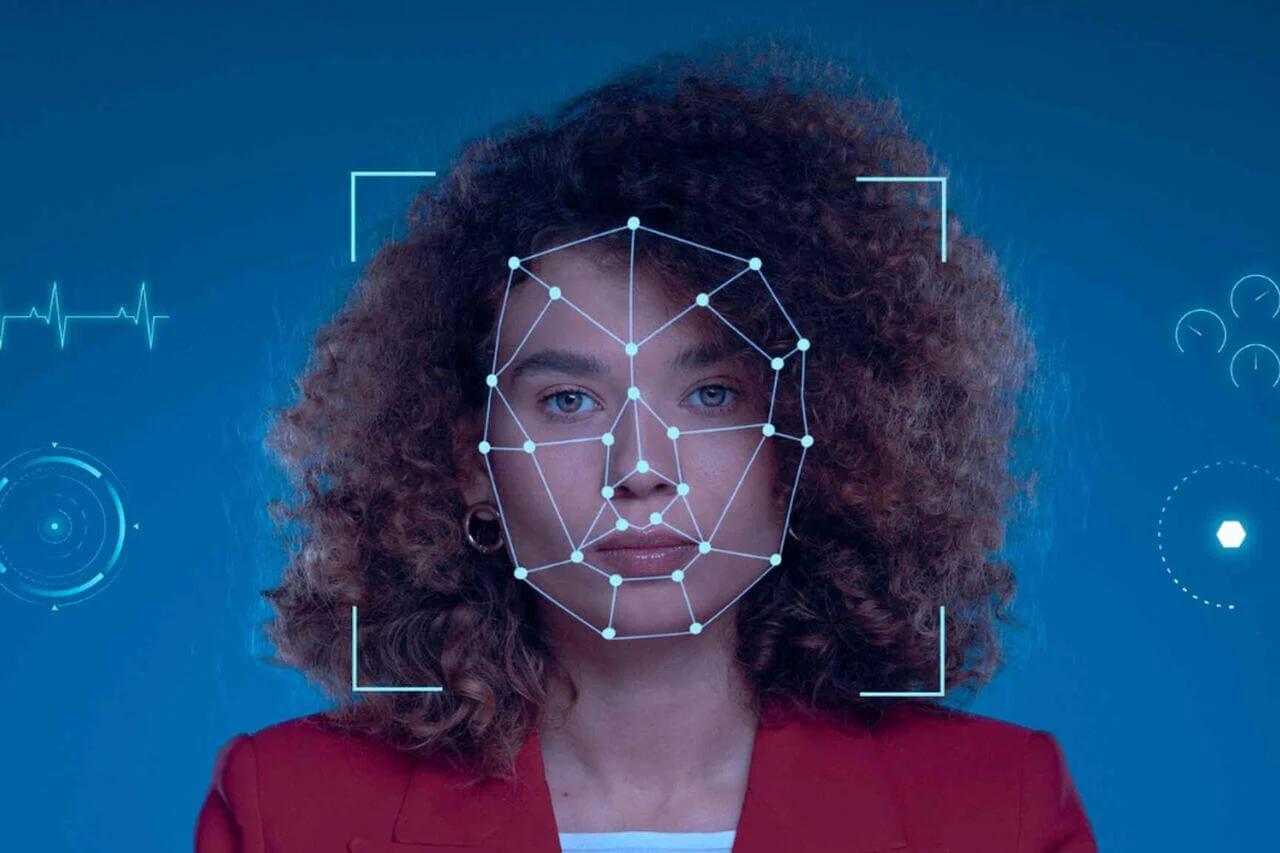
Facial recognition system identifies the person digitally by detecting and analyzing the characteristics of the human face. Facial recognition system is a biometric verification mechanism that continues its development today with artificial intelligence and deep learning algorithms. Facial recognition technology records more than 80’ unique points on each person’s face (such as distance between eye sockets, nose width, jawline structure, location of cheek bones) with digital mapping
The maps are converted into personalized mathematical formulas, creating a unique “face fingerprint”. The technology, which was initially developed for military and security purposes, is now used in many areas such as human resources management and the retail sector.
How Do Facial Recognition Systems Work?
Face Detection Phase
Facial recognition systems detect the presence of a human face from the image. Advanced algorithms, unlike other objects in the environment, determine the facial area by scanning the characteristic features of the human face such as oval shape, symmetrical structure, eye-nose-mouth positions. During the face detection phase, the system is optimized to recognize the face even from different angles, distances and light conditions.
Detection technology has evolved from traditional methods such as the Viola-Jones algorithm to deep learning systems based on today’s Evolved Neural Networks (CNN). Modern systems detect with an accuracy rate of up to 97’%, even when the face is partially visible, in low light conditions, or when accessories such as masks/glasses are used.
Feature Extraction and Analysis
After the face is detected, the system begins to remove the distinctive features of this face. Distances and angles between certain points on the face (eye corners, nose tip, lip edges, eyebrow line, chin line, etc.) are measured precisely.
Modern systems analyze 80-200 points and create a detailed face map. Feature extraction algorithms range from methods such as traditional Gabor wavelets and Local Binary Patterns (LBP) to deep learning models such as DeepFace and FaceNet. Deep learning (deep learning) models also learn the appearance of the face in different conditions and maintain the success of facial recognition despite variables such as aging, expression change, and beard/makeup condition.
Conversion to Digital Data
When facial analysis is performed, the information obtained is converted into a numerical data format. The created data format is called “face signature” or “face vector”. The face vector is generally a 128-256 dimensional vector. This mathematical representation functions as the digital counterpart of the physical face and becomes comparable and can be stored in the database.
The conversion process converts it into a sequence of code that reflects the physical properties of the face and does not directly contain the image of the face. In this way, it cannot be recycled to the original photo and data security is ensured. Very small amounts of data can be stored during this process. The face vector takes up approximately 4-8 KB of space.
Comparison and Matching
Finally, the resulting face vector is compared with the records in the database. For matching, a “similarity score is calculated. If the similarity score representing the mathematical distance between two face vectors is above a certain value, the system decides that there is a match.
In facial recognition systems, comparison is made between millions of records per second and the process is completed in milliseconds. Advanced systems make it easier to make decisions by generating a confidence score between possible matches.
Where is the Facial Recognition System Used?
Human Resources and Workplace Safety
Human resources departments use facial recognition systems in various operational processes. Facial recognition system may be preferred in security protocols to record the entry and exit of employees.
Personnel attendance tracking it replaces traditional card printing or fingerprint reading systems. Facial recognition-based attendance tracking systems can record employees’ entries and exits as they pass in front of the camera, without physical contact. Access control it ensures that only authorized personnel can enter sensitive areas within the company (server rooms, R&D laboratories, management floors).
It eliminates the risk of physical keys or access cards being lost, stolen or shared. The system keeps records of who is where and when and investigates possible security breaches. Workplace safety practices it is important in production areas where hazardous machines are located. The system minimizes the risks of work accidents by allowing only trained and authorized personnel to use certain equipment. Thanks to facial recognition technology, employees’ use of protective equipment (berets, glasses, masks) can also be controlled.
| Application Area | Traditional Method | Facial Recognition System | Productivity Increase |
| Personnel Attendance Tracking | Card printing / Signing | Automatic facial recognition | 34% time saving |
| Access control | Physical key/card | Contactless facial recognition | 78% faster entry |
| Educational Participation | Manual polling | Automatic facial recognition | 92% more accurate data |
| Overtime Tracking | Manual input | Automatic calculation | 45% error reduction |
| Security Breach Detection | Security personnel | Real-time alert | 62% faster intervention |
Facial Recognition in Daily Life
Facial recognition technology is also used in various areas of our daily lives. Facial recognition system is used in many areas such as unlocking mechanisms of smartphones and shopping experiences it improves user experienceA. Facial recognition on mobile devices It became very common in 2017’ with Apple’s Face ID technology. More than 65’% of smartphones use this technology. Users can unlock their mobile phones in seconds, avoiding the hassle of entering a password.
In the retail industry, facial recognition is often used to personalize the customer experience. Personalized discounts and suggestions can be offered by recognizing the previous shopping preferences of the customer entering the store. Safe-free store concepts such as Amazon Go can also automatically bill customers’ purchases with facial recognition technology.
Public Safety and Audit
One of the most common uses of facial recognition technology is public safety and control mechanisms. Facial recognition technology is used in important tasks such as law enforcement, border control and finding missing persons. Law enforcement actively uses facial recognition systems to identify suspects. Images obtained from camera recordings make it possible to identify suspects by comparing them with records in the police database.
Airports and border checkpoints widely use facial recognition systems in passenger authentication. This technology speeds up passport controls and prevents the use of fake IDs. The “Smart Gates” system implemented at Dubai Airport reduced passenger processing time to an average of 7-9 seconds. Facial recognition technology plays a life-saving role in finding missing persons, especially for children and the elderly. By uploading the photo of the missing person to the system, matching images obtained from city cameras can be made.
Advantages of Facial Recognition Technology
Facial recognition technology offers several advantages:
Facial Recognition and Data Security – KVKK and GDPR Compliance
Facial recognition technology is of particular importance for the protection of personal data. Biometric data is classified as “special personal data” within the scope of the Personal Data Protection Law (KVKK) in Turkey and the General Data Protection Regulation (GDPR) of the European Union. Considering KVKK explicit consent is mandatory for the use of facial recognition systems. Human resources departments must obtain an informed consent form from employees regarding the use of this technology.
In addition, companies using these systems must clearly state the purpose of processing the data, storage period and security measures. Biometric data only according to Article 6 of the KVKK with the express consent of the data subject or it can be processed in cases stipulated by law.
From a GDPR perspective facial recognition data Under Article 9 Personal data with “special categories is considered as ”. Strict conditions have been introduced for the processing of facial recognition data:
Recommended data security approaches for human resources:
Things to Consider When Choosing a Facial Recognition System for Human Resources
There are some points to consider when choosing the right facial recognition system for human resources departments.
Factors to consider when choosing a system are:
Cost analysis should include the total cost of ownership (TCO), not just the initial investment.
In this context:
Free time ideal for use in human resources and workplace safety facial recognition system devices it offers. ZKTeco and Soyal models quick recognition, multiple biometric support (fingerprint, card access system RFID card readerit can increase operational efficiency with its ‘s) and high security features.
Frequently Asked Questions
Is the Facial Recognition System Affected by Changes Such as Glasses, Beards or Makeup?
Modern facial recognition systems are minimally affected by changes such as glasses, beard and light make-up. Advanced algorithms can perform accurate recognition by focusing on the unchanging basic features of the face. However, accessories that prevent complete recognition may reduce the accuracy of the system.
How to Get Permission from Employees to Use a Facial Recognition System?
Before applying a facial recognition system, employees should be given clear and understandable information. The information provided should include the purpose for which the data will be used, how it will be protected, how long it will be stored and the rights of employees. Within the scope of KVKK, “Open Consent Text should be prepared and written approval should be obtained from employees. Employees’ choice rights can be protected by offering alternative authentication methods.
Can Facial Recognition System Be Used in Overtime Tracking and Overtime Calculations?
Facial recognition-based follow-up systems increase the accuracy of working hours by automatically and error-free recording of employees’ entry and exit times. It also creates a reliable data set that can be referenced in overtime calculations. This data can be integrated with payroll systems.
How to Calculate Return on Investment of Facial Recognition System?
The following factors should be taken into account in calculating the return on investment of the facial recognition system:
– Increase in accuracy in personnel attendance tracking and savings achieved
– Reduction in need of security personnel
Reducing the costs of systems such as – Card printing and signature
– Efficiency increase caused by reduced data entry errors
– Security improvement achieved by preventing unauthorized access
– Increased satisfaction and commitment with the improvement of employee experience
– Insurance premium savings resulting from reduced risk of work accidents
In the average medium-sized business, the turnaround time for facial recognition system investment can vary between 12-18 months.