Exploring the 7 Types of Security Patrolling – A Comprehensive Guide
Patrolling is a crucial security measure that involves regularly monitoring a designated area to ensure its safety. Security guards and companies employ various patrolling techniques to safeguard businesses and their assets. This proactive approach allows security officers to identify potential threats and maintain a secure environment. Security patrols come in different forms and are conducted at various times to maximize effectiveness.
What is Security Patrolling?
Security patrolling is a fundamental duty of any security guard firm. It involves a security officer systematically navigating a predetermined perimeter, such as your business premises, to ensure everything is in order and to deter illegal activities. The primary objectives of security patrolling are:
By protecting personnel from threats and ensuring a safe working environment, security guards contribute significantly to a company’s overall security and reputation.
The 7 Types of Security Patrolling
Security patrols can take various forms, including motorized or foot patrols, and may involve the use of advanced technologies such as CCTV cameras, alarm systems, and drones. Here are the seven main types of security patrolling:
1. Foot Patrol
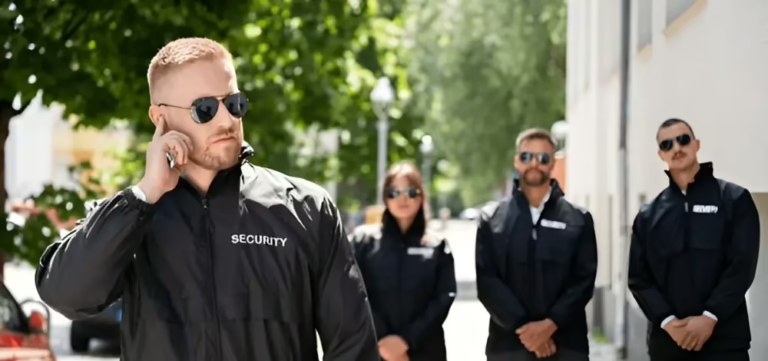
Foot patrol security involves a guard physically walking around the premises to identify and address any issues. This method is particularly effective in areas where vehicles cannot be used. Foot patrols can be customized to meet specific requirements, such as locking or unlocking entrances at designated times.
2. Mobile Patrol
Mobile security patrols utilize vehicles designed to be highly visible deterrents. These patrols are ideal for covering large areas quickly, such as apartment complexes and corporate office parks. Mobile patrols are especially effective when an immediate response is required, such as in the event of an alarm or security breach.
3. Active Patrolling
Active patrolling involves security professionals regularly leaving a stationary position to inspect the perimeter and surrounding areas. This type of patrol is useful for identifying and mitigating potential security hazards. Active patrols are commonly used in workplaces like offices and occur on a regular, rotational basis.
4. Observation Post Patrol
Observation post patrols are typically used in areas with significant security needs and large territories to cover. A security officer monitors the site from a high vantage point or key stations, providing a comprehensive view of the area. This method often includes a foot patrol guard who can respond quickly to signals or messages from the observer.
5. Random Patrolling
Random patrolling serves the same purpose as active patrolling but follows an unpredictable pattern. The randomness of these patrols makes it difficult for criminals to anticipate and evade them, thereby enhancing their deterrent effect. Random patrols can be conducted on foot or in vehicles and contribute to a reduction in crime rates.
6. Cyber Patrol
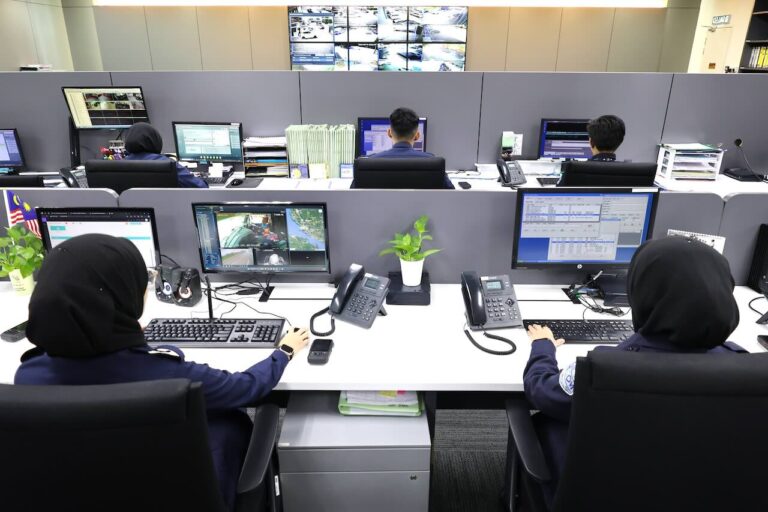
Cyber patrolling leverages modern technology to monitor multiple areas simultaneously. A cyber patrol guard typically works in an on-site room with monitors displaying live video surveillance feeds. If an issue is detected, the guard can switch to foot patrol or dispatch another guard to address the concern in person.
7. Artificial Intelligence Patrol
Artificial Intelligence patrolling is used in areas unsuitable for human patrols, such as hazardous chemical regions. Robots or drones equipped with cameras allow guards to remotely monitor these areas. Any security incidents can then be appropriately managed by the guard.
Who Can Benefit from Patrol Security Services?
While patrol security services are often associated with residential security, various industries are increasingly investing in these services due to rising crime rates. Construction sites, hotels, farming sites, and event managers overseeing large venues can all benefit from security patrols.
The Benefits of Patrol Security
Patrol security offers numerous benefits, including enhanced situational awareness, crime deterrence, and the protection of personnel and assets. By employing a combination of patrolling techniques, businesses can significantly improve their overall security posture.
For more information on the advantages of security patrol systems, you can refer to this authoritative source.
What are the Private Security Patrol Methods?
Private Security Patrol, success in the security sector is shaped by strategic planning of systematic patrol methods and execution with scientifically based approaches rather than random practices. In the modern period, the transition from the traditional guard approach to proactive security strategies becomes possible with the diversity and technological integration of patrol methods. In this article, we will increase operational efficiency private security patrol methods we discussed it.
What are Private Security Patrol Methods and Why Are They Important?
Private security patrol methods it refers to the systematic organization of control activities carried out by security personnel at regular intervals in a certain area. These methods not only detect vulnerabilities, but also play an indispensable role in preventing potential threats by creating a deterrent effect.
Patrol methods in modern security approaches form the cornerstone of the transition from reactive security to proactive security strategies. Traditional guard tour control system unlike its services, systematic patrol applications are complex processes that require multidimensional approaches such as risk assessment, resource optimization and technological integration.
Organizations that provide professional security services adopt scientifically based approaches in patrol planning rather than random rotation. This approach provides critical advantages in minimizing vulnerabilities and optimizing resource usage.
Security Patrol Methods and Operational Applications
Patrol methods, which form the basis of professional security operations, arise from a balanced combination of strategic positioning and tactical mobility principles. These fundamental approaches are customized to risk profile and operational requirements, providing maximum security coverage.
Fixed Point Patrol System
The fixed point patrol method is designed for situations requiring a continuous safety presence in critical locations. In this method, personnel are deployed in strategic locations and ensure uninterrupted control of certain areas. It is preferred for high-risk areas such as banks, hospitals and industrial facilities.
In fixed point applications, position selection is made to increase the viewing angle and mobility of the personnel. The effectiveness of this method is directly linked to the right spot selection and the staff’s capacity for situational awareness.
Moving Patrol System
A mobile patrol system is a dynamic approach applied in situations where large areas need to be controlled. Staff perform periodic checks of different areas, moving along predetermined routes. This method is widely used in large areas such as shopping malls, campuses and industrial areas.
In mobile patrol applications, timing and route diversity are vital to prevent security vulnerabilities from occurring. Avoiding predictable patterns prevents potential threats from learning patrol timing.
Modern Patrol Techniques and Strategic Advantages
In contemporary security paradigms, traditional single-method approaches are being replaced by adaptive and integrated strategies.
Using modern patrol techniques, multi-method synthesis and technological enhancements, it overcomes traditional limitations and achieves superior operational results.
What is Combined Patrol and How to Implement It
Combined patrol covers hybrid approaches in which different patrol methods are integrated. This technique combines the advantages of fixed point and mobile patrol systems, providing maximum security coverage.
In combined patrol applications, fixed personnel are maintained at critical points, while other areas are controlled by mobile teams. This approach offers superior performance in terms of resource optimization and risk management.
What is Circular Patrol and Its Implementation Principles
Circular patrol or field-oriented patrol is based on geometric-based strategic planning. Circular patrol is a systematic approach applied on routes that expand in concentric circles, starting from a central point.
In this method, the personnel moves from the center point towards the outer walls and returns, providing control at different radii. The circular patrol system is exceptionally effective in structured areas such as airports and large complexes.
Patrol Planning and Optimization Strategies
Effective patrol planning requires evaluation of multidimensional parameters such as risk assessment, resource allocation and temporal analysis. Professional security organizations use mathematical modeling and statistical analysis techniques when creating patrol schedules.
| Patrol Type | Optimal Time | Number of Personnel | Application Area |
| Fixed point | 8-12 hours | 1-2 people | Critical points |
| Moving | 2-4 hours | 1 person | Large areas |
| Combined | 6-8 hours | 2-3 people | Mixed regions |
| Circular | 3-6 hours | 1-2 people | Regular settlements |
In patrol planning, shift rotations are designed to minimize staff fatigue levels. Working hours in line with the circadian rhythm optimize staff performance and reduce the risks of human error.
Risk scoring plays a fundamental role in determining patrol frequency. High risk areas are checked more frequently, and low risk areas are checked less frequently. This approach maintains security coverage while maximizing resource efficiency. Seasonal changes and special events are variable factors to consider in patrol planning. Increased activity levels during holiday periods require additional safety measures.
Technology Assisted Patrol Solutions and Modern Approaches
In contemporary security applications, the integration of traditional patrol methods and advanced technology creates revolutionary transformations. GPS tracking, real-time tracking and mobile applications increase the effectiveness of patrol operations at an exponential level.
Free time QR Patrol Smart Patrol Tour Control System this is one of the practical applications of technological development. Working on iOS and Android platforms, this system provides comprehensive patrol control using QR code, NFC, Bluetooth and Virtual GPS technologies. Thanks to web-based management software, it becomes operational without requiring installation.
QR-Oil system, it turns the smartphones of patrol personnel into a professional tour control system. The system offers real-time location tracking, retrospective route analysis and event reporting capabilities via online map with GPS. SOS alarm function enables instant response in emergency situations. The most important advantage of mobile technology integration is the transition from paper-based reporting to digital documentation. This conversion increases accountability and strengthens the audit trail.
Artificial intelligence and machine learning algorithms analyze patrol patterns and provide optimization recommendations. Predictive analytics enables proactive measures by anticipating potential security breaches. IoT sensors and intelligent surveillance systems complete patrol operations, creating a comprehensive security ecosystem. This integrated approach increases the synergy between human resources and technology.
Factors Increasing Private Security Patrol Effectiveness
Factors that optimize the success rate of professional patrol operations are complex variables that require a multifaceted approach.
Systematic analysis of these factors is necessary to achieve operational excellence.
Quality assurance protocols ensure that patrol operations comply with standards. Regular inspections and inspections drive systematic development.
Customer expectation management shapes the perception of service quality. Clear communication regarding service scope and limitations creates realistic expectations.
Risk mitigation strategies provide proactive protection against potential hazards. Comprehensive risk assessments identify vulnerabilities and develop mitigation plans. Professional development opportunities maintain staff motivation and increase the level of expertise. Career advancement paths make it easier to retain talent. Selection criteria between special types of security patrols should be customized according to specific requirements. Instead of a single solution approach, adapted solutions deliver superior results.
Frequently Asked Questions
How is patrol frequency determined and what factors are taken into account?
Patrol frequency is determined by risk assessment scores, area size, threat level and operational requirements. High-risk areas are controlled hourly, medium-risk areas are controlled at 2-4 hour intervals, and low-risk areas are controlled at 6-8 hour intervals.
Is there a difference between day and night patrol methods?
Night patrols require advanced lighting equipment, increased frequency and thermal imaging technology. Due to vision limitations, checkpoint verification becomes more critical and emergency response procedures are adapted.
How do weather conditions affect patrol planning?
Extreme weather conditions change patrol routes, timing and equipment requirements. Alternative indoor routes are planned and weatherproof equipment is used. Security protocols are adjusted according to adverse conditions.
What are the minimum qualifications for patrol personnel?
Legal authorization, basic safety training certification, physical fitness standards and communication skills are minimum requirements. Specialized areas may require additional certifications and special training programs.
What standards apply to patrol reporting and documentation?
Comprehensive incident reports, timestamped activity logs, photographic evidence and witness statements are standard documentation requirements. Digital systems maintain audit trails and ensure regulatory compliance.
7 Essential Tips for Safe and Effective Security Patrols
7 Essential Tips for Safe and Effective Security Patrols
Security guards are the unsung heroes who keep our communities, businesses, and properties safe. To excel in their roles, they must be well-trained and equipped with the knowledge to perform their duties safely. In this article, we’ll explore seven crucial safety tips for security patrols to ensure they can protect an area effectively. Following these guidelines will help keep both security personnel and the public safe.
Our Top Seven Security Guard Safety Tips
Security guards have a challenging job that requires constant vigilance. They must always be on the lookout for potential threats and ensure the safety of everyone around them. Unfortunately, security guards can sometimes encounter high-stakes, dangerous situations that demand special knowledge and training. By adhering to these simple security measures, you can help maintain safety for yourself and others while on patrol.
1. Always Be Aware Of Your Surroundings
As a security guard, it’s vital to always be aware of your surroundings. This means staying alert and paying close attention to details. For instance, you should notice if someone is loitering in an area for too long or if there are any unusual objects left behind. By being vigilant, you can help deter crime and keep people safe. Additionally, knowing the layout of your patrol area is crucial so you can respond quickly in case of an incident. Overall, being aware of your surroundings helps create a safe environment for everyone.
2. Keep A Lookout For Suspicious Activity
Always be on the lookout for anything suspicious, such as people in areas where they shouldn’t be, strange vehicles parked nearby, or broken windows. If you see anything out of the ordinary, report it to your supervisor immediately. While suspicious activity might sometimes be harmless, it’s always better to err on the side of caution. You never know when a potential security threat could arise, so remaining vigilant at all times is key to ensuring safety.
3. Stay Calm And In Control During Emergencies
One of the most important things you can do during an emergency is to stay calm and in control. When adrenaline is pumping and hearts are racing, it’s easy to lose focus and make mistakes. However, staying calm allows you to think clearly and act decisively. Take a few deep breaths and try to relax when an emergency situation arises. Staying calm can significantly impact the outcome of an emergency, making it one of the most crucial actions you can take.
4. Follow Your Security Guard Protocol
As a security guard, you are responsible for the safety of yourself and others. Always follow the emergency procedures you learned during your training to maintain a safe and secure environment. While on duty, stay aware of your surroundings at all times. If you see something suspicious, report it to your supervisor immediately. Knowing the layout of the property you are guarding is also essential so you can respond quickly in an emergency. By following your security guard protocol, you help ensure a safe experience for everyone involved.
5. Be Aware Of Hazardous Areas On The Job Site
To perform their job effectively, security guards need to be aware of potential hazards in their work area. Consult with the security guard management team to familiarize yourself with the property layout and receive specific instructions on where to patrol and what to look for. Conduct a security sweep of the premises by walking through the property and identifying any potential hazards. Stay aware of any changes in your work environment, such as construction or other activities that could create new hazards. By being aware of these potential hazards, security guards can help ensure the safety of themselves and those they are protecting.
6. Use Common Sense
Common sense is one of the most important tools security officers have at their disposal. Security guards must quickly assess potential threats and take appropriate action. For example, if a security guard sees something suspicious, they should use their better judgment to decide whether to approach the person or situation alone. Avoid wearing clothes that restrict movement and make it difficult to perform your job. Always have a backup plan and know when to call for help. Additionally, security guards should be aware of their surroundings at all times, paying attention to doors, windows, and blind spots. By using common sense and staying aware, security guards can help keep everyone safe.
7. Be Prepared For Anything
As a security guard, you never know what might happen while you’re on patrol. That’s why it’s always important to be prepared for anything. Carry essential security equipment like a first-aid kit in case you or someone else gets hurt. Have protective gear such as a flashlight for dark areas, protective clothing, and a whistle to attract attention if needed. It’s also a good idea to carry a security guard management guidebook for reference. By being prepared for anything, you’ll be able to handle any situation that comes up while on patrol.
What Is The Role Of A Security Guard?
A security guard is responsible for the safety of people and property. They may work in various settings, such as office buildings, schools, hospitals, and retail stores. Security guards typically patrol the premises to deter crime and investigate suspicious activity. In emergencies, they may also provide first aid or contact emergency services. Security guards play a crucial role in ensuring the safety of both people and property. By deterring crime and responding to emergencies, they help create a safe and secure environment for everyone.
Many people view security guards as a necessary part of safety, but the truth is that they play an essential role in keeping us safe. Whether patrolling a parking lot or monitoring a building, security guards are on the front lines of safety. In many cases, they are the first responders to an incident and can provide vital assistance until other help arrives. They also help deter crime simply by their presence. Would-be criminals are less likely to act if they know security guards are on duty. Additionally, security guards can provide invaluable information to law enforcement in the event of a crime. By working diligently, security guards contribute significantly to our safety and security.