Unlocking the Power of Metropolitan Area Networks (MANs): A Comprehensive Guide
What Are Metropolitan Area Networks (MANs)?
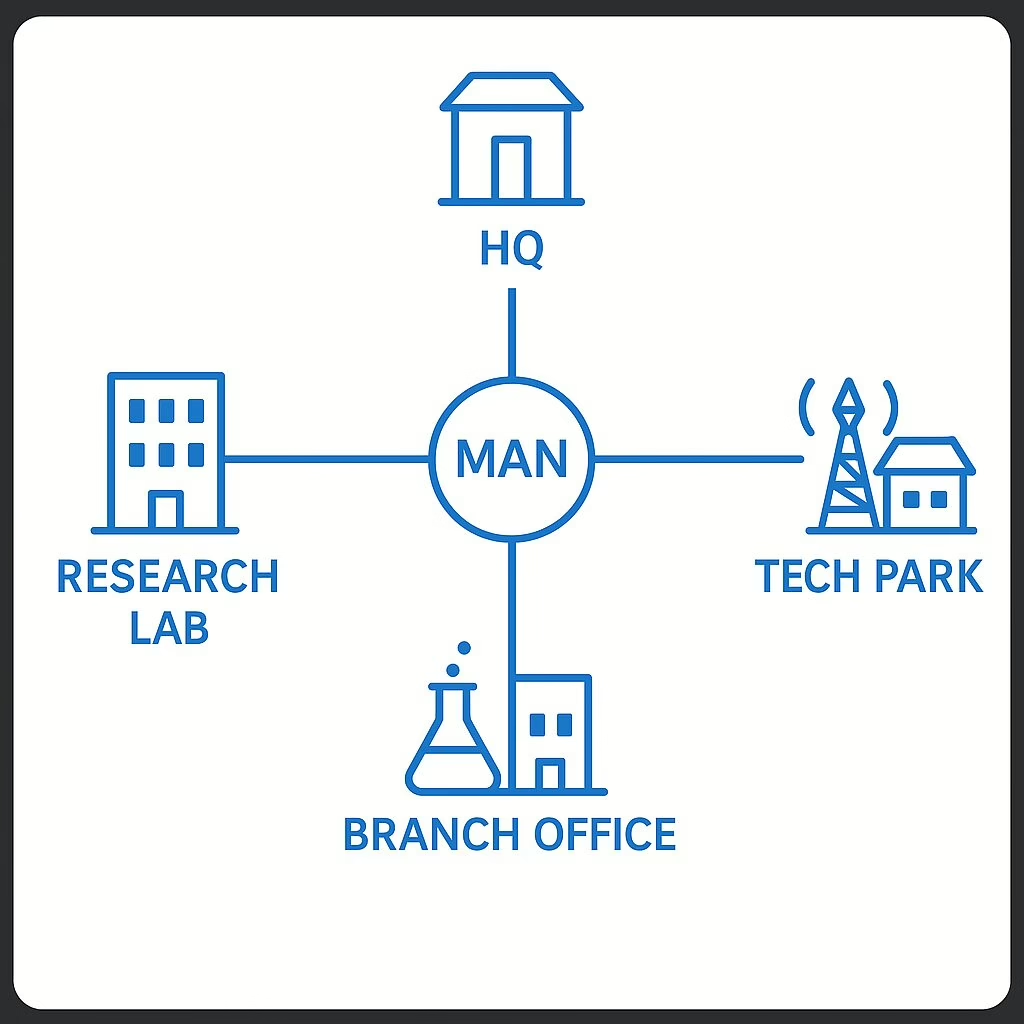
A Metropolitan Area Network (MAN) is a high-speed network that connects computers and devices within a metropolitan region. This could include a single large city, multiple towns, or any extensive area with numerous buildings. MANs are larger than Local Area Networks (LANs) but smaller than Wide Area Networks (WANs). The term “metropolitan” refers to the network’s size rather than the area’s demographics.
Structure and Efficiency of MANs
Like WANs, a MAN consists of interconnected LANs. Due to their smaller size, MANs are typically more efficient than WANs because data doesn’t need to travel over long distances. MANs can either combine the networks of multiple organizations or be managed by a single entity. The typical size of MANs ranges from 5 to 50 kilometers. If all the buildings are located on a single contiguous property, it may also be referred to as a campus network.
Why MANs Matter for Businesses
Most small to medium-sized businesses (SMBs) may not require MANs. However, larger SMBs with multiple buildings can benefit significantly from MANs. They allow the network to be spread across all structures, providing a consistent network across the entire organization. MANs are also ideal for organizations located on a campus, such as schools or business centers.
Cities and towns might also be interested in creating a MAN to facilitate communications across a wide area or to provide Internet services to residents. However, this comes with liability issues that need to be considered, such as illegal activities and downloads.
Network Segmentation in a MAN
Segmentation in a MAN is crucial because it involves many more users and devices. When supporting or building a MAN, careful consideration should be given to network segmentation and communications within the MAN and out to the Internet. You should segment the MAN both between locations and within locations. For example, an apartment building could be segmented into floors, or a location could have segments within departments of the business.
Think of network segmentation as a submarine hatch that prevents a fire from spreading from one compartment to the next. Closing a segment when it is compromised protects the rest of your MAN from being affected.
Cybersecurity Recommendations for MANs
In addition to understanding MANs, the following recommendations will help you and your business stay secure against various threats:
- Govern Employees with Policies and Procedures: Implement a password policy, an acceptable use policy, an information handling policy, and a written information security program (WISP).
- Train Employees: Educate employees on how to spot and avoid phishing attacks. Use a Learning Management System to teach employees the skills they need to be more confident, productive, and secure.
- Test Employees: Conduct phishing tests to practice and improve employee awareness. Use believable phishing attacks and provide remedial training for those who fail.
- Deploy Critical Cybersecurity Technology: Enable two-factor authentication on all critical accounts. Implement email SPAM filtering, validate backups, deploy DNS protection, antivirus, and anti-malware on all endpoints.
- Manage Personal Devices: Ensure that personal devices connecting to your network are secure. Validate their security measures or prohibit their use entirely.
- Conduct Risk Assessments: Consider having a risk assessment by a third party. Establishing a risk management framework is critical to addressing your most significant risks.
- Buy Cyber-Insurance: Protect your organization in case of a catastrophic failure. Cyber-insurance is essential and provides coverage when you need it most.
For more information on Metropolitan Area Networks (MANs), you can refer to authoritative sources such as Techopedia.