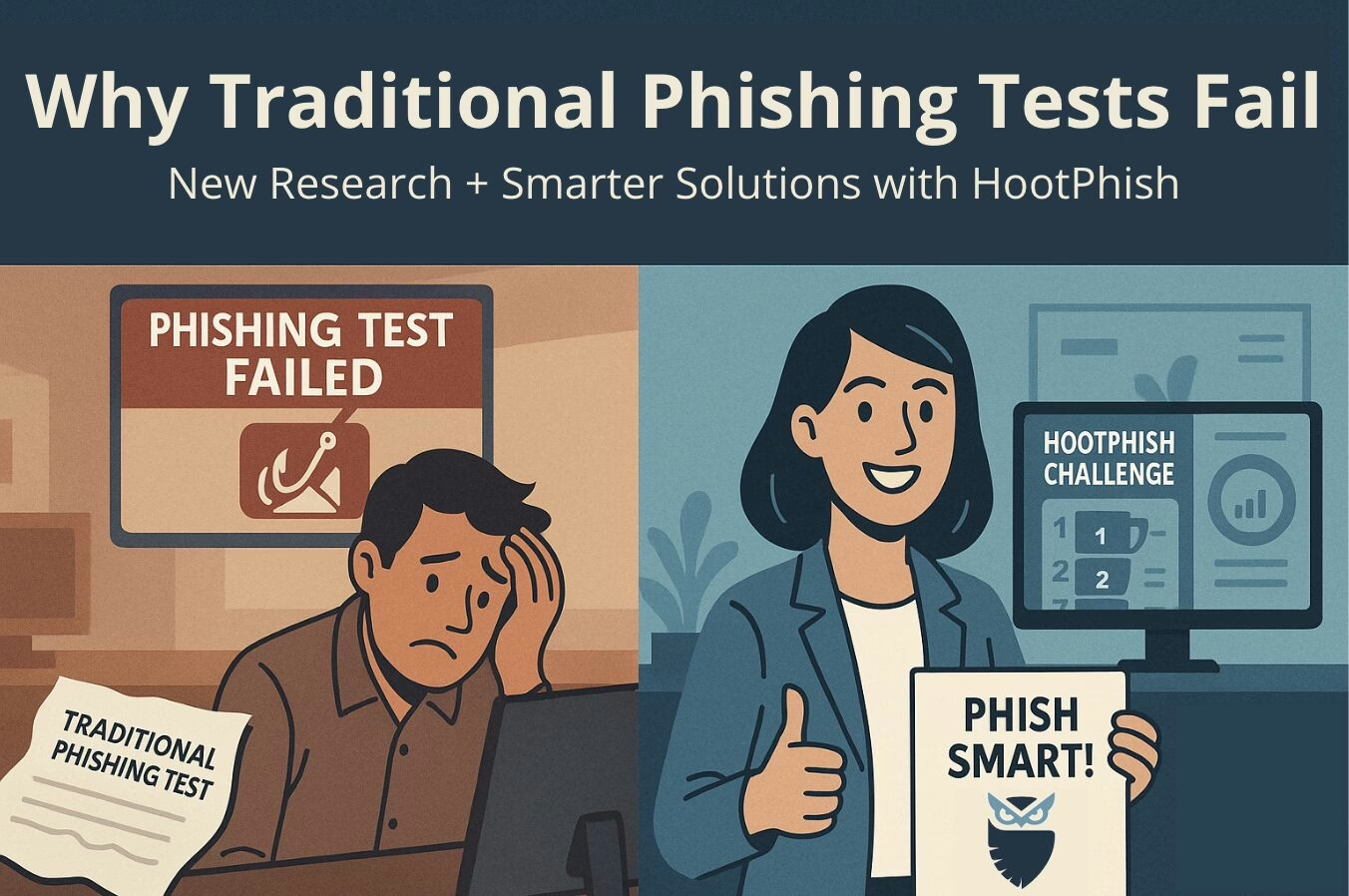
Why Old-School Phishing Tests Fail and How to Fix Them
Why Traditional Phishing Tests Miss the Mark
For years, companies have used simulated phishing emails to test how well employees can spot phishing attacks. But new research shows these old-school methods might be doing more harm than good. A study presented at Black Hat USA 2025 by security experts from the University of Chicago and the University of San Diego found that traditional phishing training methods just don’t work—and they might even backfire.
Key Findings from the Black Hat Study
The study looked at how well phishing awareness training works over time. It turns out that traditional phishing simulations, especially those that rely on shaming or punishing employees, don’t actually make people better at spotting phishing attempts. Instead, they often lead to:
- User fatigue and disengagement: Employees get tired of the same old tests and stop paying attention.
- Desensitization to phishing cues: People start ignoring the warning signs of phishing because they see them so often.
- Workplace resentment and fear of failure: Employees feel stressed and anxious, which makes them less likely to engage with the training.
In short, the “gotcha” approach makes people more anxious and less likely to learn anything useful.
Introducing HootPhish: A Game-Changing Solution
At CyberHoot, we think there’s a better way. Our HootPhish platform skips the punishment and focuses on positive reinforcement and rewards. This approach keeps employees engaged, empowered, and ready to change their behavior for the better.
How HootPhish Solves the Problem
HootPhish tackles the issues raised by the Black Hat researchers with some innovative features:
- Positive Reinforcement Over Punishment: Instead of shaming employees who fail, HootPhish offers immediate, friendly education, turning mistakes into learning opportunities.
- High Engagement User Participation: Unlike traditional tests that only track email opens and clicks, HootPhish includes all users in the results, giving a full picture of how everyone is doing.
- Gamified Challenges: With the HootPhish Challenge, users get randomized phishing simulations and leaderboard-based scoring, making the whole process more engaging and competitive.
- Gamification: HootPhish uses avatars to represent cyber literacy knowledge and progress, making cybersecurity training more enjoyable.
- Measured Behavior Change: HootPhish doesn’t just test users—it trains them, tracking their improvement over time to help organizations prove ROI and meet compliance mandates.
Why HootPhish Stands Out
HootPhish assignments are ready to go with no setup or allow-listing needed, making it one of the most automated solutions out there for administrators.
Download Our Whitepaper
We’ve put everything you need to know into one easy-to-read whitepaper. Inside, you’ll learn:
- Why click-based metrics are dangerously incomplete
- How 6 or 7 visual cues are used in every HootPhish simulation to teach a rubric
- The science behind positive reinforcement in security awareness
- Real-world data showing better engagement and improved outcomes
Final Thoughts
The evidence is clear: traditional phishing simulations that rely on fear and punishment just don’t work. The Black Hat research confirms this. Our patent-pending approach is based on 75 years of psychological research on behavioral change and offers a smarter, more effective way to defend against phishing.
If you’re ready to move beyond old-school testing and towards a more effective phishing defense, we’re here to help. Learn more about HootPhish and secure your business with CyberHoot today.
For further reading, check out the Black Hat USA website.