Upgrade Your Tech: Unleash Enhanced Security & Peak Efficiency
Why Upgrading Your Tech is Essential for Security and Efficiency
Just like the ancient pyramids of Egypt and the Great Wall of China, some structures are built to last. However, computer hardware and software are not among them. IT departments often find themselves replacing workstations, servers, and technology infrastructure as they begin to slow down, stop receiving vendor updates, and fall out of warranty. But why is it so crucial to upgrade your aging tech? Let’s explore the reasons behind this common recommendation.
End-of-Life/End-of-Support Risks
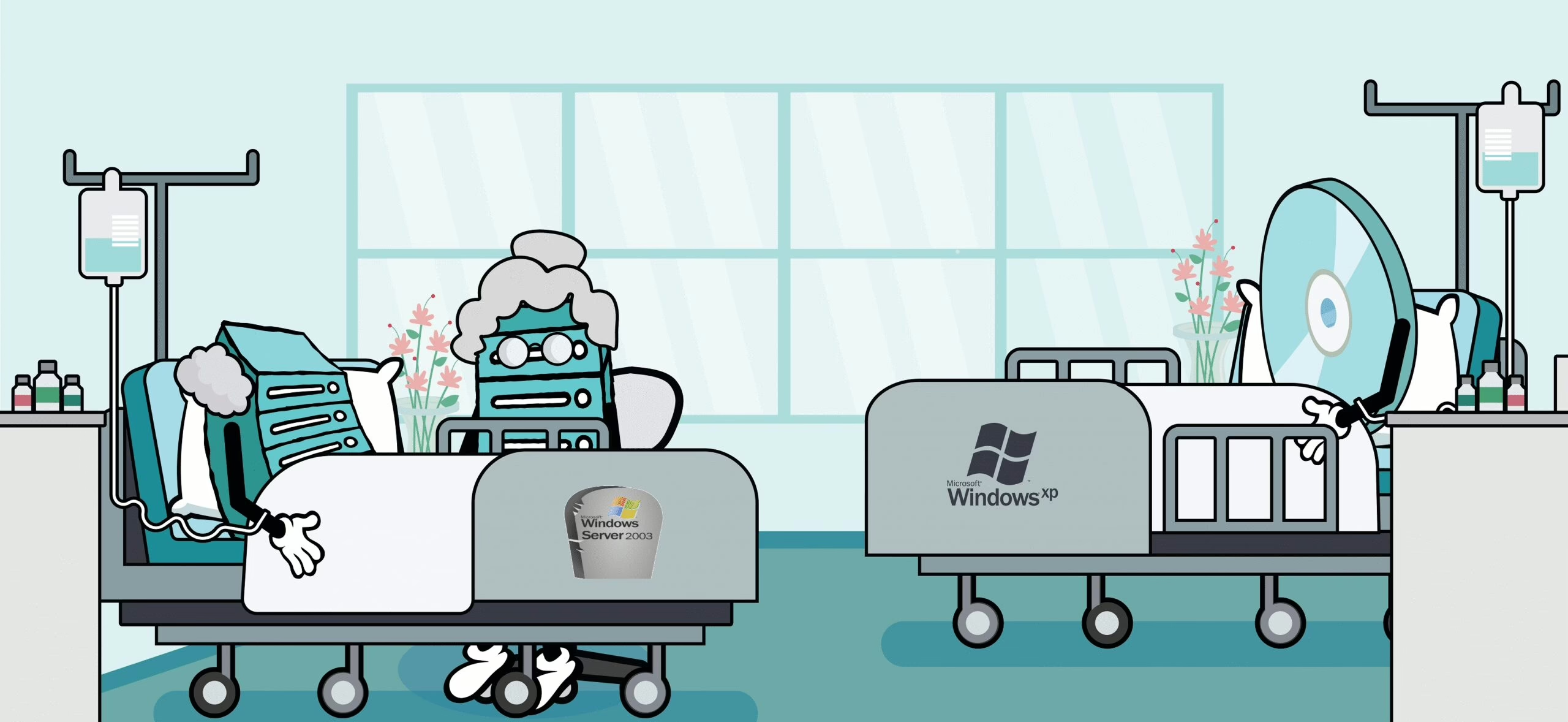
One of the primary reasons businesses should consider upgrading their hardware and software is when a vendor stops supporting it. This can be from a hardware and replacement part perspective or from a software development standpoint. For instance, Windows Server 2003 went End-of-Life (EOL) / End-of-Support (EOS) in July 2015, meaning Microsoft has not been developing patches or compatible software for that operating system for over five years.
Increased Maintenance Costs
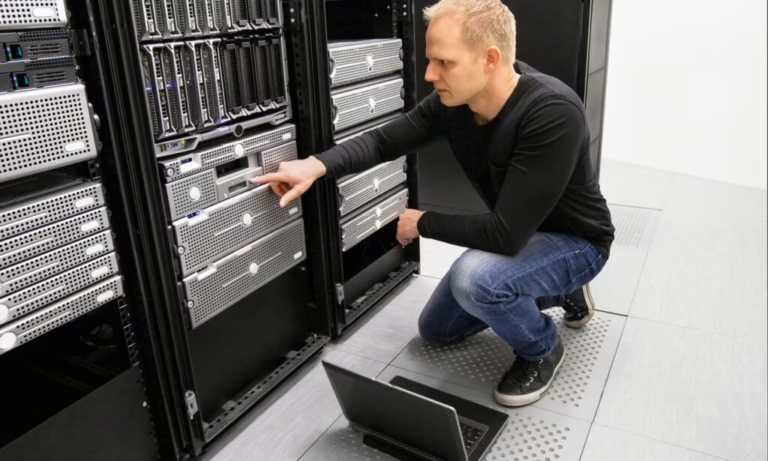
Hardware running on outdated operating systems is likely to be antiquated, slow, and difficult to find replacement parts for. Unlike cars, where parts are available for decades, computer parts stop being manufactured shortly after the hardware is retired by the vendor. For example, there are reports of circuit boards for 1980s mainframes that cost $5,000 when new but sell today for over $1,000,000 due to their scarcity.
Security Vulnerabilities
EOL and EOS hardware and software become increasingly more expensive to maintain and cannot be fixed in some circumstances due to parts being unavailable. Another well-known problem with EOL/EOS software and hardware is the lack of updates and patches, making those operating systems highly vulnerable to security threats. No software is ever perfect, and businesses must plan on deploying patches regularly and urgently when a security risk is announced by the vendor. EOL/EOS systems cannot receive such fixes, leaving companies non-compliant with industry requirements and vulnerable to phishing attacks that could take the entire network down.
Additional Risks of Not Upgrading
Beyond unavailable replacement parts, security patches, and poor performance, companies will not be able to run mission-critical software solutions on aging hardware due to incompatibility. Older operating systems like Windows 2003 Server cannot even run current Commercial Off-The-Shelf (COTS) software due to its age.
Hidden Risks
There are many other important and hidden risks to not upgrading and staying current with your Information Technology (IT) infrastructure. These risks include:
- Easy target for hackers due to missing or unavailable security fixes
- Older hardware is highly prone to catastrophic failure (power supplies, hard disks, etc.)
- Increased downtime duration during recovery activity because hardware/software can’t be found or is not available for download
- Compliance and audit failures if audited
- Loss of brand/reputation made worse by extended downtime or inability to recover critical data
- Accumulation of technical debt makes future changes and upgrades much more difficult and longer to do (if it’s even possible)
- Inferior performance and hardware reliability
- Incompatible software you may wish/need to run
- Support is unavailable for troubleshooting
- Prevents digital transformation: Cloud-enabled services cannot be used. For example, Windows Server 2003 cannot talk to Azure AD
- Staff frustration from a lack of investment in their productivity and support
What Can You Do?
Businesses often try to save money by waiting to upgrade devices and software until they are forced to. However, coding for backward compatibility is costly, time-consuming, and may introduce security risks in one’s product. It is better for software and hardware vendors to start fresh every so often and EOL/EOS their oldest products.
Businesses should migrate to newer software and hardware when the risks of staying on older hardware or software are too great. By upgrading, you’ll be more productive, with happier employees, less downtime, and better security and compliance.
For more information on the dangers of End-of-Life software, you can refer to SpiceWorks – EOL Software.