The Ultimate Guide to Computer Security and Internet Safety – Protecting Your Digital Life
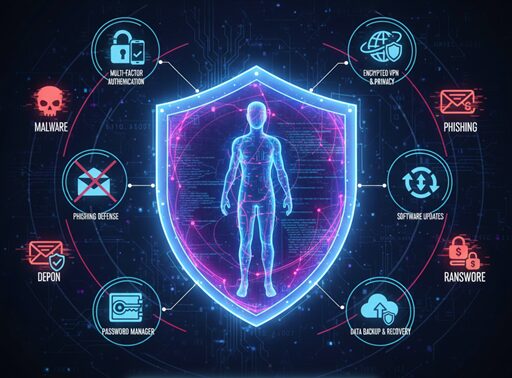
Navigating the modern digital world requires more than just good antivirus software; it demands a comprehensive, layered strategy. This is The Ultimate Guide to establishing robust Computer Security and Internet Safety for yourself, your family, or your small business. Every click, every download, and every social media interaction carries risk, making constant vigilance and education essential. By mastering the principles outlined in The Ultimate Guide, you can transform your digital devices from vulnerable targets into secure, resilient fortresses against cyber threats like malware, phishing, and identity theft.
Establishing a Secure Foundation: Hardware and Software
The most fundamental steps in The Ultimate Guide involve securing the physical and digital foundations of your computer.
Strong Authentication Practices
Software and System Hygiene
Mastering Internet Safety and Phishing Prevention
Internet safety revolves around awareness and skepticism. Attackers primarily target human weakness, not just technical flaws.
Recognizing Phishing and Social Engineering
Phishing is the most common form of cyberattack. It is crucial for anyone following The Ultimate Guide to know how to spot it.
Secure Browsing Habits
Protecting Your Data and Privacy
The core objective of The Ultimate Guide is to ensure your personal data remains private and secure.
Data Backup Strategy
Managing Your Digital Footprint
By consistently applying these principles, you move beyond basic security and truly master the practices outlined in The Ultimate Guide to Computer Security and Internet Safety, ensuring long-term protection in the digital age.
Why Internet Safety is No Longer Optional
The digital world is a vast universe brimming with opportunity and innovation. However, this universe, much like the real world, has its dark corners. Let’s be honest: the Internet is not, by its nature, an entirely safe place. At any given moment, cybercriminals are attempting to breach your computer, worms are seeking to infect you, malicious Trojans are masquerading as helpful programs, and spyware is reporting your every move back to its creators. In many cases, those who become victims of these digital pathogens unknowingly become a “petri dish” for unwanted programs and criminal activity.
But this is not a destiny. It is a warning, not a prophecy. With the right education, a proactive mindset, and smart computing habits, the Internet can transform into a secure, useful, and enjoyable space—one where you don’t have to worry about what’s lurking around the corner. This guide was created to provide the core strategies and techniques for smart and safe computing. By implementing these 7 key steps, you will not only protect yourself and your valuable data from hackers and viruses, but you will also ensure your computer runs more smoothly and reliably.
Your 7-Step Digital Security Checklist
1. Fortify Your Foundation: The Critical Role of OS Updates
The most critical and fundamental step for any computer user is to install Operating System (OS) updates, especially security patches, without delay the moment they become available.
When software is developed, “bugs”—programming errors that can cause security vulnerabilities or unexpected behavior—are unfortunately created. It doesn’t matter which operating system we are discussing; these flaws are always present. Because of this, companies routinely release updates and patches to fix these security vulnerabilities as they are discovered. By failing to install them, you leave your computer vulnerable to remote attackers. Thankfully, all modern operating systems provide simple, often automatic, methods for installing new updates.
2. Secure Your Entry Points: Keep All Applications Updated
One of the most common vectors for infection is through security vulnerabilities in your installed programs. Common applications are targeted due to their large user base, including web browsers, Microsoft Office, Adobe Reader, and Oracle Java.
To make your computer as secure as possible, you must ensure these programs are updated when new security fixes are released. The core problem is that many people ignore alerts about new updates. If you are prompted by a known application that you commonly use, stating there is a new update, allow it to be updated. This is especially vital for web browsers, which are commonly targeted by malicious code on websites.
3. The Master Key Rule: Why You Must Use Unique Passwords
It has become commonplace to hear news of another company being hacked. If you use the same password at every site, and just one of those sites is compromised, the hacker now has your account information for everywhere you have an account.
It is vital to use a different, strong password at every single site. Since this is impossible to remember, use a password management program (like Keepass, 1Password, or Bitwarden) to securely store your account information.
A Simple Trick for Memorable Passwords If you would rather not use a manager, creating a standard password pattern is far better than using the same password. For example, a pattern like [year born+sitename]!55. So, at CNN, you could have 1975cnn!55. This ensures you are using a different and strong password at each site.
4. Bolster Your Immune System: Use and Update Antivirus Software
It is a critical necessity that your computer is running active antivirus software. By having it running, files and emails are scanned as you use, download, or open them.
However, there is no point in running an antivirus program if you do not ensure it has the latest updates. An outdated antivirus program will not recognize new threats. It is imperative that you update your antivirus software at least once a week (most do this automatically) so you are protected from the latest threats. It is also suggested that you install a free anti-malware scanner (like MalwareBytes) for a periodic “second opinion.”
5. Defend Your Borders: The Non-Negotiable Need for a Firewall
The importance of using a firewall on your computer or network cannot be overstated. Even if you have all the latest security updates, you are still susceptible to “zero-day” vulnerabilities—undisclosed, unpatched, or unknown flaws that a hacker may know about.
A firewall makes the majority of these security holes inaccessible, as it will block unknown or unexpected connection attempts before they ever reach your computer’s applications.
6. Create Your Insurance Policy: The Power of Backing Up Your Data
Backing up your data isn’t necessarily a way of keeping your computer safe, but it is the only way of keeping your data safe. This isn’t about prevention; it’s about resilience.
A time may come when your hard drive fails or ransomware encrypts your files. Having a regular backup of your data available saves you from the anguish of losing those hours of work or those irreplaceable photos. Both Windows (Windows Backup) and MacOS (Time Machine) have free, built-in backup software. Use them.
7. See Through the Deception: How Enabling File Extensions Protects You
It is important to enable file extensions so you can see the complete file name. Many viruses sent via email attachments use a double extension, such as picture.jpg.exe.
Because Windows is configured by default to hide extensions, it will strip off the .exe, and the file will appear to you as picture.jpg—a harmless image file. Once you click on it, the virus runs. Enabling file extensions exposes this simple but effective trick, allowing you to see exactly what you’re dealing with.
From Easy Target to Secure Fortress
Digital security isn’t about one single tool; it’s about building a layered defense. By following these 7 essential steps—from consistent updates to smart password habits and reliable backups—you transform your computer from an easy target into a secure fortress. Stay vigilant, stay updated, and browse safely.