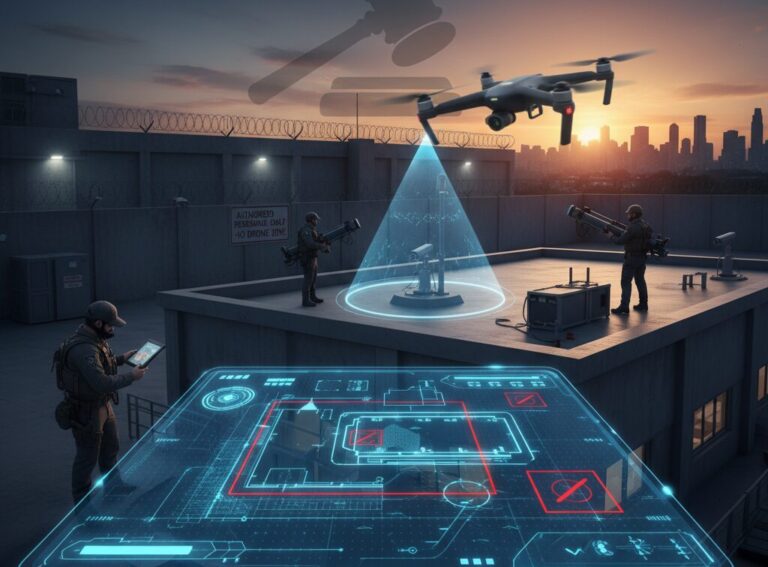
PSIM – The ‘Single Pane of Glass’ Revolutionizing Corporate Security
Control rooms are often overwhelmed by dozens of disparate systems—CCTV, access control, fire alarms, and intrusion detection—each operating in its own silo in the complex ecosystem of modern corporate security. The future of enterprise risk management lies in integrating these fragmented tools into one unified interface, a concept known as the single pane of glass. Physical Security Information Management (PSIM) software is the technology driving this revolution, offering security teams unprecedented visibility, rapid response capabilities, and streamlined operations through this highly sought-after single pane of glass.
The Challenge of Siloed Security Systems
Imagine a security guard having to monitor ten different screens, each displaying data from a separate system. In a crisis—like a fire alarm coinciding with a server room access breach—the time lost manually correlating information across these various platforms can have catastrophic consequences. This fragmented reality is what PSIM is designed to solve. The core value of PSIM is providing a true single pane of glass view, eliminating the confusion and delay inherent in managing siloed technologies.
Achieving the Single Pane of Glass
PSIM operates as a middleware platform that sits above all existing security infrastructure. It does not replace the CCTV cameras or the access control readers; instead, it aggregates their data, analyzes it, and presents all necessary information to the operator via the single pane of glass.
Key Features Delivered by the Single Pane of Glass:
The Business Case for the Single Pane of Glass
The benefits of adopting PSIM and its single pane of glass extend beyond mere security to touch on operational efficiency and compliance:
By providing a unified, intelligent, and action-oriented single pane of glass, PSIM transforms corporate security from a reactive collection of devices into a proactive, cohesive defense system.
Drowning in data from separate security systems? Discover how PSIM (Physical Security Information Management) creates a ‘single pane of glass’ to unify your tech, boost situational awareness, and slash response times.
The ‘Single Pane of Glass’ Revolutionizing Corporate Security
In today’s corporate environment, security is anything but simple. A typical Security Operations Center (SOC) looks like a mission control room—and not in a good way. You have one screen for video surveillance (CCTV), another for access control, a third for intrusion alarms, and maybe more for fire detection, perimeter sensors, and panic buttons.
Your security team is forced to swivel-chair between these “siloed” systems, trying to manually piece together a coherent picture during a crisis. This setup isn’t just inefficient; it’s a liability.
But what if you could consolidate all that noise into one clear, intelligent, and actionable interface? Enter PSIM, or Physical Security Information Management. It’s the “single pane of glass” that’s fundamentally changing the game for corporate security, moving operations from reactive chaos to intelligent, proactive defense.
A Data Tsunami
Let’s paint a picture that’s all too real for many facility and security managers.
An alarm triggers. Where? The intrusion system says “Zone 4.” The operator turns to the access control log. Who? They see a “forced door” event at the rear entrance. They swivel to the VMS (Video Management System). What’s happening? They have to find the right camera, rewind the footage, and confirm the threat—all while the clock is ticking. This manual correlation is slow and ripe for human error. By the time the operator has a clear picture, the incident is already well underway. This is “alarm fatigue” in action, and it’s where critical threats get missed.
What is PSIM (Physical Security Information Management)?
It’s crucial to understand what PSIM is—and what it isn’t.
A PSIM is not another security device. It is a software platform designed to integrate multiple, disparate security systems from different vendors. It sits on top of your existing hardware (like cameras, card readers, and sensors) and unifies them into one comprehensive user interface.
Think of it as the “brain” of your security ecosystem. It collects data from all its “senses”—video, access, alarms—and processes it into a single, understandable picture. This is the “single pane of glass.”
The 5 Game-Changing Benefits of a ‘Single Pane of Glass’
Moving to a PSIM solution isn’t just an upgrade; it’s a transformation. Here’s the bottom line on how it delivers tangible ROI and drastically improves security posture.
True Situational Awareness
Instead of just an alarm, a PSIM gives you context. When that “Zone 4” alarm sounds, the PSIM platform can automatically:
Your operator sees everything they need, all at once.
Lightning-Fast, Guided Response
This is where PSIM truly shines. The platform doesn’t just show you the problem; it tells you what to do next. You can build pre-programmed, automated workflows (or Standard Operating Procedures – SOPs) for any scenario.
Example: “Forced Door” Event
- Event: Door 3 is forced open.
- PSIM Action (Automatic):
- Locks down all other doors in that sector.
- Triggers an audible alarm in the immediate area.
- Pushes live video from cameras 5, 6, and 8 to the main screen.
- Displays a step-by-step checklist for the security operator.
- Logs every single action for future reporting.
This slashes response times from minutes to seconds.
Slashing False Alarms and Operator Fatigue
A disconnected system treats a tree branch hitting a fence sensor with the same urgency as a real intruder. A PSIM is smarter. It uses data correlation to filter the noise. For instance, it can be programmed to only escalate an “alarm” to a “threat” if the fence sensor and a nearby motion detector are triggered, or if video analytics confirm a human shape. This lets your team focus on what’s real, dramatically reducing the costly drain of “alarm fatigue.”
Total Integration and Future-Proofing
One of the biggest headaches for security directors is “vendor lock-in.” You bought Brand A cameras and a Brand B access control system, and they don’t talk to each other.
A true PSIM platform is vendor-agnostic. It uses open standards to connect with hundreds of different products. This means you can keep the hardware you already have and easily add new, best-in-class technology later without worrying about compatibility.
Driving Down Costs and Proving ROI
How do you prove your security department’s value to the C-Suite? With data.
A PSIM platform is a powerful business intelligence tool. It automatically logs every event, every operator action, and every response time. You can instantly generate reports to:
Is PSIM Right for Your Organization?
While powerful, PSIM is not a one-size-fits-all solution. It delivers the highest value for organizations managing complex, large-scale, or high-risk environments. This includes:
If your organization is struggling to manage multiple security systems, drowning in false alarms, or worried about slow response times, exploring a PSIM solution is no longer an option—it’s a necessity. The future of security isn’t about more guards or more cameras. It’s about being smarter. The “single pane of glass” provided by PSIM is the clear path to a smarter, more responsive, and more resilient security operation.