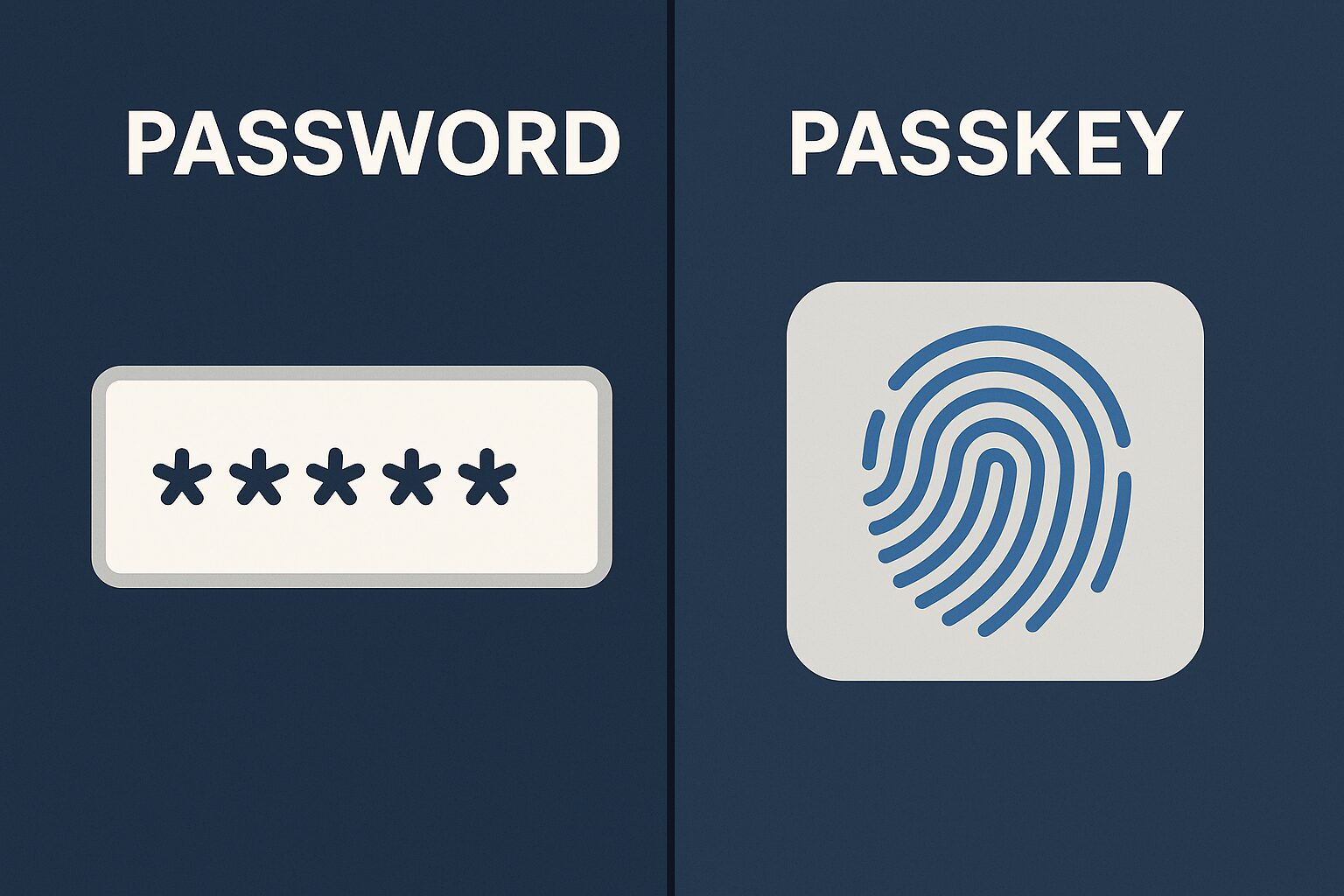
Passkeys vs Passwords – Why You Should Finally Ditch Your Master Password in 2025
For decades, the password has been the undisputed gatekeeper of our digital lives. Yet, year after year, headlines scream about massive data breaches, and users groan under the weight of “password fatigue.” Even the venerable Master Password, the core of your password manager, is an increasingly vulnerable single point of failure.
In 2025, the conversation is no longer about managing complexity; it’s about embracing simplicity and true security. The era of the alphanumeric string is over. The definitive answer to digital authentication is here, and it is time to shift your perspective on Passkeys vs Passwords.
This comprehensive guide breaks down the critical differences in the Passkeys vs Passwords debate, illuminates the superior security model of passkeys, and provides a compelling argument for why this is the year you finally move past the master password paradigm.
The Legacy Problem – Why Passwords (and Master Passwords) Fail
Before exploring the future, we must acknowledge the fundamental failures of the past. The vulnerability of passwords is rooted in three key weaknesses, all of which are solved by the Passkeys vs Passwords shift:
Phishing Vulnerability
Traditional passwords (even strong, unique ones) are susceptible to phishing. If you are tricked into typing your credentials into a fake website, the attacker instantly owns your account. A master password, despite its strength, is equally vulnerable if phished from your password vault’s login screen.
Server-Side Breaches
No matter how complex your unique password is, it is stored on a company’s server. If that server is compromised, your password (or its hashed equivalent) is exposed. This single point of failure is why millions of accounts are compromised every year.
Human Error and Fatigue
Users inevitably reuse weak passwords, stick notes to their monitors, or save passwords in insecure browser caches. The requirement to remember or constantly manage complex strings inherently makes the system brittle.
In the ongoing Passkeys vs Passwords battle, the failure is clear: passwords rely on secrets stored somewhere—either in your brain or on a server—making them inherently prone to theft.
Understanding the Future: What are Passkeys?
Passkeys are not a new type of password; they are an entirely new approach to authentication built on the robust foundation of public-key cryptography. They adhere to the FIDO Alliance standards and are designed to provide the highest level of security available today.
How Passkeys Work
When you create a passkey for a service (e.g., Google, PayPal, or your bank):
When you log in, the service uses your Public Key to issue a challenge. Your device verifies the challenge using your local biometric data, signs the challenge with the Private Key, and sends it back. The service verifies the signature using the Public Key. Crucially, no password or shared secret is ever transmitted. This shift from shared secrets to cryptographic key pairs is the game-changing difference in the Passkeys vs Passwords debate.
The Security Showdown: Passkeys vs Passwords
When we put the two head-to-head, the security gap highlights why the Passkeys vs Passwords transition is inevitable and necessary:
| Security Feature | Passkeys (The Future) | Passwords (The Legacy) |
| Phishing Resistance | Inherently Immune. The login process is tied to the original site’s domain, preventing key transmission to fake sites. | Highly Vulnerable. Can be easily stolen via fake login pages. |
| Server Breach Risk | Zero Risk. Only the Public Key (which is useless to an attacker) is stored on the server. Your Private Key remains on your device. | High Risk. Hashes of your password are stored, which can be reverse-engineered or used in ‘credential stuffing’ attacks. |
| Authentication Requirement | Local biometric data or device PIN (something you are or something you have). | Memory (something you know), often leading to reuse. |
| Two-Factor Authentication (2FA) | Built-in. The Private Key is the second factor, requiring possession of the device. | Optional and Often Inconvenient. Requires separate apps or SMS codes. |
The advantage in the Passkeys vs Passwords comparison is overwhelming: Passkeys eliminate the most common attack vectors—phishing and data breaches—at the source.
Seamless Authentication – Why the Switch is Easy in 2025
The biggest win in the Passkeys vs Passwords discussion is convenience. Security measures often fail because they are too difficult for the average user. Passkeys fix this.
Instead of typing a 25-character master password into your vault and then another unique password into a login field, using a passkey is as simple as:
That’s it. It’s faster, simpler, and works instantly across your devices because major platforms (Apple iCloud Keychain, Google Password Manager, Windows Hello) are providing robust, cross-platform syncing for passkeys.
Why Ditch the Master Password in 2025?
While password managers solved the complexity problem of the password era, the fundamental flaws of the password itself remain. In 2025, the mass adoption of passkeys by major tech platforms makes the argument for Passkeys vs Passwords undeniable. Your master password, no matter how strong, is the single cryptographic key to every other secret you own. If that one key is ever phished, logged, or compromised, your entire digital life is immediately exposed.
By transitioning to passkeys, you replace that single, vulnerable key with thousands of separate, phishing-resistant cryptographic keys. If one service is compromised, all others remain secure. Passkeys vs Passwords ultimately comes down to centralized, weak security versus decentralized, strong security. This is the year to transition because the infrastructure is finally in place across the web, making the move practical and simple.
The debate between Passkeys vs Passwords is settled. Passwords were a good solution for the early internet, but they are a liability in 2025. Passkeys represent a fundamental, necessary, and welcome evolution in cybersecurity, offering superior protection without sacrificing user experience. The time has come to stop managing secrets that can be stolen and start embracing cryptographic keys that cannot. Make 2025 the year you finally ditch your master password and step into the era of seamless, phishing-resistant security.