Microsoft Advanced Threat Analytics: Your Ultimate Cyber Defense Solution
Unveiling Microsoft Advanced Threat Analytics (ATA)
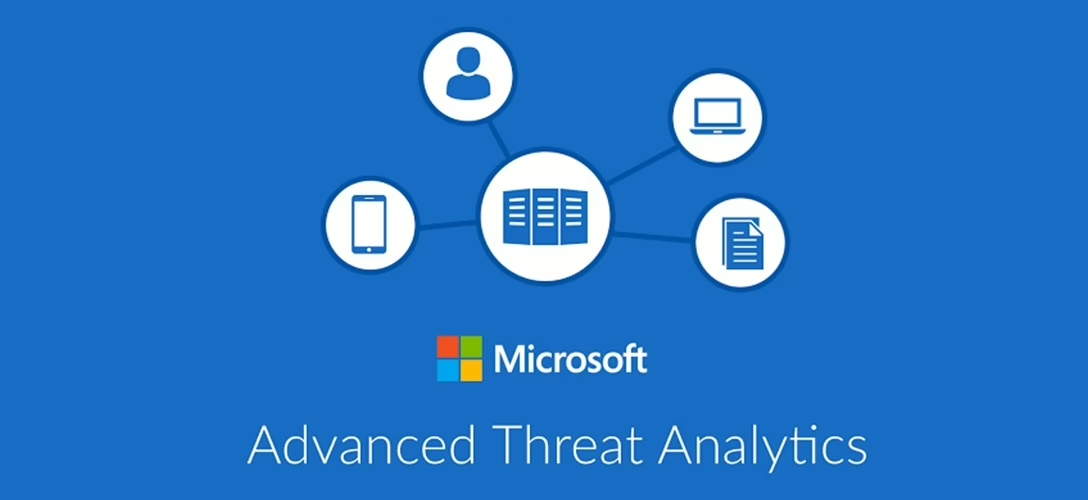
Microsoft Advanced Threat Analytics (ATA) is a powerful tool designed to safeguard organizations from a wide range of cyber threats. It offers real-time alerts about network attacks, ensuring robust security. Think of it as Microsoft’s very own Intrusion Detection System (IDS).
How Microsoft ATA Operates
Microsoft ATA utilizes a network parsing engine that monitors and differentiates packets by scrutinizing network traffic over protocols like Kerberos, DNS, RPC, and NTLM. It also collects information through these protocols. This data gathering is made possible through Domain Controller, DNS servers, ATA Gateway, and ATA Lightweight Gateway.
ATA studies the behavior of entities and users within an organization by analyzing logs and events on the system, thereby creating a behavioral profile. It gathers information about logs and events from structures like SIEM Integration, Windows Event Forwarding (WEF), and Windows Event Collector.
The Predictive Power of Microsoft ATA
Microsoft ATA predicts how attackers might gather information on the network, which systems they might target, and how they might proceed post-exploitation. It provides insights into how an attacker might exploit various entry points to compromise target systems, thereby enabling early warnings during an attack.
Threat Classification by Microsoft ATA
Microsoft ATA categorizes cyber threats into three main types:
Malicious Attacks
ATA identifies suspicious activities, providing details about the perpetrator, the timing, and the nature of the suspicious activity. Techniques classified as malicious attacks include:
- Pass The Ticket
- Pass The Hash
- Overpass The Hash
- Forged PAC (MS14-068)
- Golden Ticket
- Malicious Replications
- Reconnaissance Activities
- Brute-Force Attacks
- Remote Code Execution
Abnormal Behaviors
Using machine learning, ATA detects and reports suspicious activities and abnormal behaviors on the network. Examples include:
- Unusual logins
- Unknown threats
- Password sharing
- Changes to sensitive groups
Security Issues and Risks
This category includes:
- The breakdown of trust structures
- The use of weak protocols
- Known protocol security vulnerabilities
Microsoft ATA Architecture
Microsoft ATA can monitor Domain Controller network traffic by using physical and virtual keys to perform port mirroring on an ATA Gateway. If an ATA Lightweight Gateway is directly added to the domain controller, port mirroring is not required. ATA can send Windows logs to any SIEM server or Domain Controller machine for analysis and necessary security measures.
Components of Microsoft ATA
The main components of Microsoft ATA are ATA Center, ATA Gateway, and ATA Lightweight Gateway.
ATA Center
The ATA Center receives network traffic and Windows logs related to the Domain Controller from the ATA Gateways and ATA Lightweight Gateways. It performs profiling, information gathering about the network, and deterministic detection of attacks. It uses machine learning and behavioral algorithms to detect abnormal behaviors and suspicious activities.
ATA Gateway
The ATA Gateway receives network traffic and Windows logs, sending them to the ATA Center machine. It performs the same functions as the ATA Lightweight Gateway.
ATA Lightweight Gateway
The ATA Lightweight Gateway is installed directly on the domain controller machine, eliminating the need for port mirroring between the domain controller and any server.
For more information on cybersecurity and related topics, you can refer to authoritative sources like NIST.