Mastering Remote Work Security: Expert Tips for Business Success
Mastering Remote Work Security: Expert Tips for Business Success
The COVID-19 pandemic has dramatically reshaped our work environment, with a significant shift towards remote work to curb the virus’s spread. Business owners have had to swiftly adapt to these changes while ensuring their operations remain effective and secure. The new standard for companies is a workforce that delivers business services remotely. This article delves into strategies and tips that companies are employing to secure their remote workers successfully.
Digital Transformation Maturity
Companies that have embraced digital transformation may have an edge in remote worker security compared to those relying on traditional on-premises solutions. Cloud-enabled companies find it easier to navigate the myriad of cybersecurity challenges. To ensure robust security, companies operating in the cloud must implement the following measures:
Strong Authentication Measures
- Two-Factor Authentication: Implement two-factor authentication across all Internet-enabled services. This adds an extra layer of security by requiring not just a password and username but also a unique piece of information that only the user possesses.
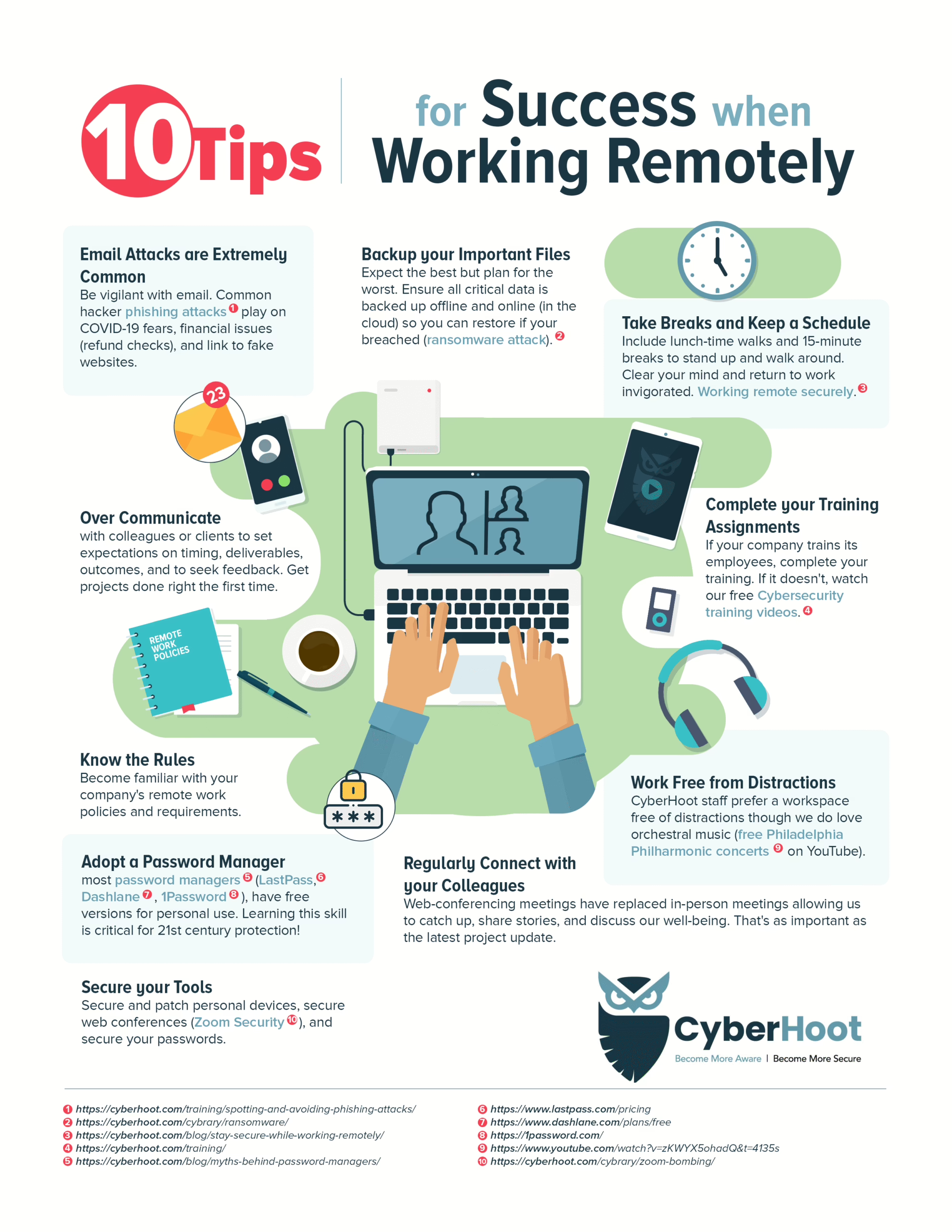
- Password Managers: Utilize password managers company-wide. These tools help generate and retrieve complex passwords, facilitating the maintenance of strong, unique passwords for each service.
Effective Administrative Processes
- On-boarding and Off-boarding Practices: Adopt effective on-boarding and off-boarding practices to ensure employees have the necessary access when they join and that access is revoked when they leave.
- Governance Policies: Establish governance policies and processes to guide employees on the selection, use, and security configuration of Software-as-a-Service (SaaS) solutions.
Robust Cybersecurity Practices
- Least Privilege Access: Ensure least privilege access is set up within cloud-enabled applications to limit access to only what is needed.
- Data Encryption: Encrypt all critical and sensitive data both in transit and at rest to protect it from unauthorized access.
On-Site Application Security Considerations for Remote Workers
Remote workers present unique cybersecurity challenges for on-site business operations compared to cloud-based service operations. The focus shifts from providing local access to resources to ensuring remote workers continue to have reliable and secure access to those same on-premises applications. Unfortunately, these on-premises applications were often not secured and hardened for remote users, relying instead on a small number of local users.
Endpoint Insecurities on Personal Devices
When working on-site, endpoint security is typically robust and reliable. Company-owned devices run antivirus protection, with privilege rights management in place, device locks after inactivity, and regular patching of both operating systems and applications. However, many companies did not budget for a mobile work-from-home workforce. Faced with purchasing laptops for every employee (and laptops have been in short supply for months), many companies have opted to allow potentially less secure home machines to connect to local resources and applications. This can put less secure machines on your internal network, posing additional risks to your data.
Access to Applications Originally Secured Only for Local Connections
Enabling access to these applications from personal devices in the home can open them up to risks from insecure and potentially compromised home machines. Poor permissions might allow greater damage when a breach occurs, and there is complexity in enabling secure remote access into systems that were previously wide open to local but finite connections. In contrast, cloud solutions always assume the worst possible connections from compromised machines. They undergo rigorous penetration testing to ensure systems are locked down and secure, unlike most local applications, servers, and networks that were never designed for such threats.
Security Tips for a Remote Workforce
While it may be easier to secure company-wide remote access than to secure numerous company-provided laptops, there are still additional best practices that should be followed to reduce the likelihood of data breaches:
- Two-Factor Authentication (2FA): All end-users must be configured for 2FA usage for remote access. This is crucial to prevent security incidents and compromises, especially since many employees reuse passwords across multiple sites, increasing the risk of credential compromise.
- Principle of Least Privilege: Access rights to both on-site and cloud applications must be carefully assigned so end-users can access only the resources they need. This can be achieved by enabling Remote Desktop Protocol into a workstation in the office, which allows all existing security within the work environment to be enforced.
- Encrypt All Traffic: Encrypt all traffic between the end user’s device and their desktops. This can be accomplished via a Virtual Private Network (VPN), which provides a secure connection.
For more information on securing your remote workforce, you can refer to authoritative sources like the Cybersecurity and Infrastructure Security Agency (CISA).