Mastering OWASP Top Ten: Your Guide to Web Application Security
Understanding OWASP and Its Importance
The Open Web Application Security Project, commonly known as OWASP, is a pivotal resource in the realm of web application security. It highlights the most critical coding mistakes that developers often make, which can lead to significant security vulnerabilities. By leveraging the OWASP Top 10, organizations can foster a culture of secure coding from the outset, ensuring robust protection against potential threats.
What is the OWASP Top 10?
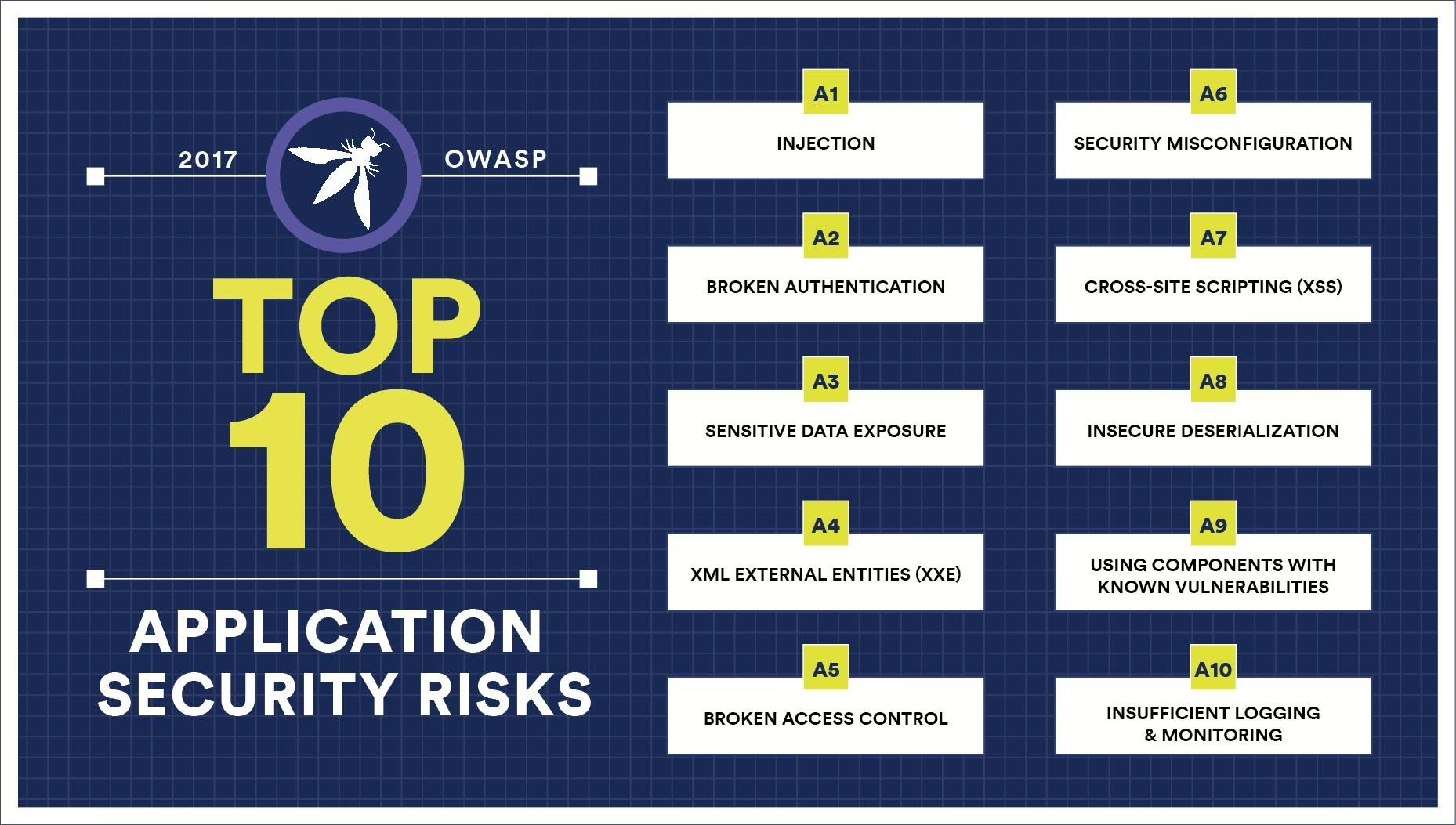
The OWASP Top 10 is a comprehensive document that outlines the ten most critical web application security risks. These risks are identified based on a broad consensus among security experts and professionals. Understanding these risks is the first step towards mitigating them effectively.
Top 10 Web Application Security Risks
1. Injection
Injection flaws, including SQL, NoSQL, OS, and LDAP injection, occur when untrusted data is sent to an interpreter as part of a command or query. This can trick the interpreter into executing unintended commands or accessing data without proper authorization, leading to severe security breaches.
2. Broken Authentication
Authentication and session management functions are often implemented incorrectly, allowing attackers to compromise passwords, keys, or session tokens. This can result in attackers assuming other users’ identities, either temporarily or permanently, leading to unauthorized access and potential data theft.
3. Sensitive Data Exposure
Many web applications and APIs fail to adequately protect sensitive data, such as financial information, healthcare records, and personally identifiable information (PII). Without proper encryption and security measures, this data can be stolen or modified, leading to credit card fraud, identity theft, and other malicious activities.
4. XML External Entities (XXE)
Older or poorly configured XML processors often evaluate external entity references within XML documents. These external entities can be exploited to disclose internal files, conduct internal port scanning, execute remote code, and perform denial-of-service attacks, posing significant security risks.
5. Broken Access Control
Restrictions on authenticated users’ actions are frequently not enforced correctly. Attackers can exploit these flaws to access unauthorized functionality and data, such as viewing sensitive files, modifying other users’ data, and changing access rights, leading to potential data breaches and unauthorized actions.
6. Security Misconfiguration
Security misconfiguration is one of the most common issues, often resulting from insecure default configurations, incomplete or ad hoc configurations, open cloud storage, misconfigured HTTP headers, and verbose error messages containing sensitive information. Regular updates and patches are crucial to maintaining a secure environment.
7. Cross-Site Scripting (XSS)
XSS flaws occur when an application includes untrusted data in a new web page without proper validation or escaping. This allows attackers to execute scripts in the victim’s browser, potentially hijacking user sessions, defacing websites, or redirecting users to malicious sites, leading to significant security threats.
8. Insecure Deserialization
Insecure deserialization can lead to remote code execution and other attacks, including replay attacks, injection attacks, and privilege escalation attacks. Even if deserialization flaws do not result in remote code execution, they can still pose significant security risks and should be addressed promptly.
9. Using Components with Known Vulnerabilities
Components such as libraries, frameworks, and other software modules often run with the same privileges as the application. If a vulnerable component is exploited, it can lead to serious data loss or server takeover, undermining application defenses and enabling various attacks.
10. Insufficient Logging & Monitoring
Insufficient logging and monitoring, coupled with missing or ineffective integration with incident response, can allow attackers to further attack systems, maintain persistence, pivot to more systems, and tamper with, extract, or destroy data. Effective logging and monitoring are essential for timely detection and response to security incidents.
Steps for SMB Owners
Small and medium-sized business (SMB) owners who develop code should prioritize training their developers on the OWASP Top 10 risks. This proactive approach can prevent many problems that become costly to fix later. Additionally, performing regular application fuzzing, application security assessments, dynamic code scanning, and static code analysis using automated tools and expert third-party testing firms is crucial.
For more detailed information, visit the official OWASP Top Ten Project.