How One Weak Password Can Destroy Your Business: A Wake-Up Call
How One Weak Password Can Destroy Your Business: A Wake-Up Call
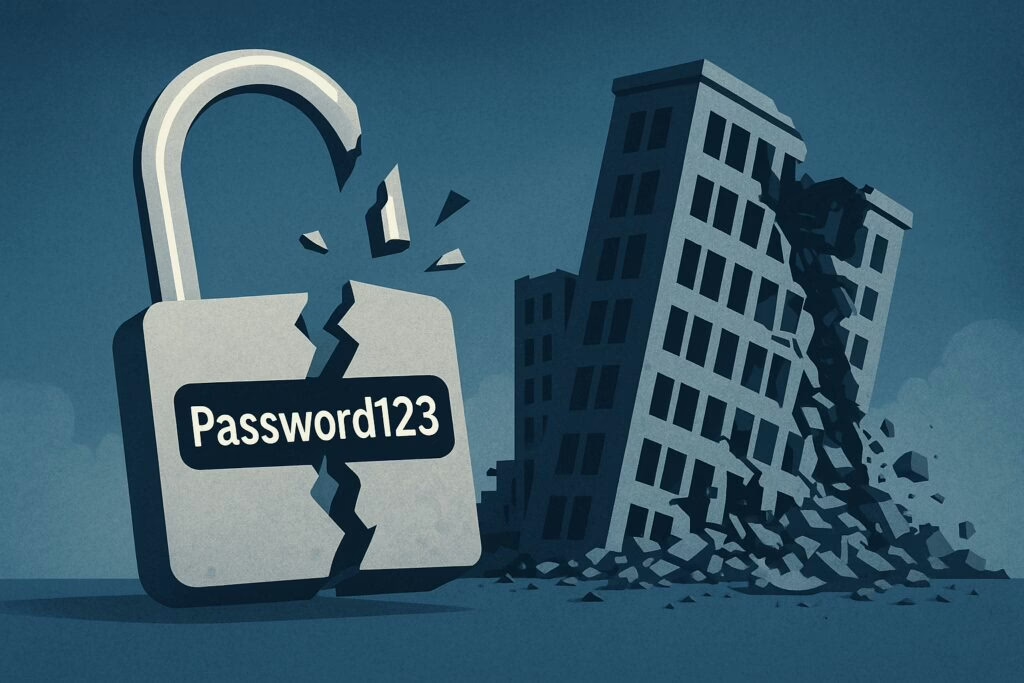
In June 2025, KNP Logistics Group, a renowned UK transport company with a fleet of 500 trucks and a history spanning nearly 200 years, met a sudden and tragic end. The culprit? A ransomware attack enabled by a single, weak employee password.
A Stark Reminder of Cyber Risk Neglect
The Akira ransomware gang didn’t need sophisticated exploits or zero-day vulnerabilities to breach KNP’s systems. They simply found an internet-facing account without multi-factor authentication (MFA), cracked the weak password, and gained access. Once inside, they encrypted critical systems, destroyed backup and disaster recovery systems, and demanded a £5 million ransom. With no viable recovery path, KNP entered administration, leaving 700 employees jobless. A single poor password and the lack of MFA brought down 158 years of business.
The Persistent Problem of Weak Passwords
Despite years of warnings, weak passwords remain a significant vulnerability:
- Nearly half of compromised passwords can be cracked in less than a minute.
- Employees often reuse personal passwords across multiple accounts.
- Many businesses still do not enforce mandatory MFA.
It only takes one careless credential to invite disaster.
Critical Lessons from the KNP Breach
This incident highlights several essential security practices:
- Enforce Strong Password Policies: Mandate long (15+ characters), unique passphrases for all passwords.
- Utilize Password Managers: These tools help store and recall unique, strong passwords.
- Enable MFA Everywhere: Ensure a stolen or guessed password is never the sole point of failure.
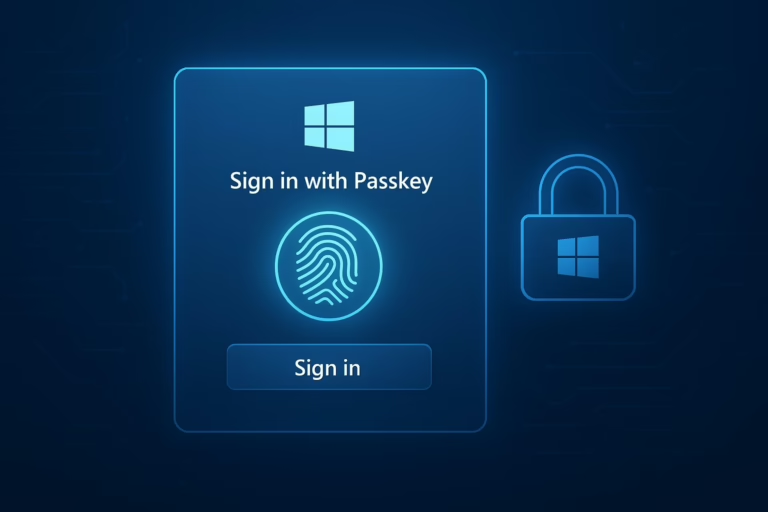
- Adopt Passkeys: Passkeys cannot be stolen or reused outside the site they protect.
- Conduct Security Awareness Testing: Schedule periodic phishing simulations to build resilience.
- Isolate and Test Backups: Maintain offline and immutable backups to survive modern ransomware attacks.
- Adopt Zero Trust and Least Privilege: Limit access for each account to minimize potential damage.
- Prioritize Network Segmentation: Limit lateral movement within the network to contain breaches.
- Implement Endpoint Detection and Response (EDR): Detect early warning signs and minimize lateral movement.
- Patch and Vulnerability Management: Address missing patches to prevent secondary ransomware entry points.
- Reward Good Behaviors: Recognize and reinforce positive cybersecurity actions.
- Purchase Cyber Insurance: Ensure critical support after a breach with the right policy.
How CyberHoot Can Help
At CyberHoot, we understand that password hygiene is a critical skill in an organization’s security culture. We focus on positive reinforcement of educational goals and practical tools, including:
- Password Hygiene Training: Engaging videos that teach employees how to build stronger passwords.
- Password Manager Guidance: Assistance in rolling out password managers to avoid password reuse.
- Passkeys and MFA Awareness: Training teams to adopt the latest technical developments like passkeys and the importance of MFA.
- Positive Reinforcement: Rewarding good behaviors to build lasting cyber hygiene habits.
Final Thoughts
The collapse of KNP Logistics was not due to hackers with unlimited resources but a single weak password. Businesses cannot afford to ignore this reality. Review your MFA coverage today. CyberHoot can help ensure no single password ever ends your business.
For more information, visit The Hacker News.