Biometric vs. Card Access Control: Choosing the Best Security for Your Building
Securing Your Building: Biometric vs. Card Access Control
When it comes to securing modern buildings, choosing the right door access control system is crucial. Two popular options are card-based and biometric access control. Both offer distinct advantages and cater to different security needs. This article explores these door access systems in detail to help you decide which access control solution fits your building best.
What is a Door Access System?
A door access system is an electronic security solution that controls and monitors entry to buildings or restricted areas. Instead of relying on traditional keys, these systems use credentials such as smart cards, key fobs, or biometric data to grant authorized access.
How Door Access Control Systems Work
A door access control system operates by authenticating a user’s credentials, either a physical card or biometric trait, at a reader installed near the entry point. Once authenticated, the system signals the electronic lock to open. Every access attempt is recorded for audit purposes. These systems may support features such as remote unlocking, time-based restrictions, and integration with broader security monitoring. This approach offers businesses flexibility, fast entry processing, and robust security management for every door.
Exploring Biometric Door Access Control
Biometric door access control identifies individuals based on unique physical traits such as fingerprints or facial recognition.
Benefits of Biometric Door Access Systems
- Unmatched Security: Biometrics are nearly impossible to fake or share, ensuring only authorized individuals gain entry.
- Convenience: No need to carry cards or remember PINs; access is granted by simply presenting your fingerprint or face.
- Speed and Accuracy: Modern biometric scanners verify users in seconds, streamlining entry.
- Irrefutable Audit Trails: Each access log ties to a unique individual, strengthening regulatory compliance.
- Integration Flexibility: Biometric systems can be combined with card readers for two-factor authentication, heightening security further.
Challenges to Keep in Mind
- Higher initial installation and equipment costs than card systems.
- Privacy concerns require careful data handling and compliance with regulations.
- Environmental factors, such as extreme lighting or dirty fingers, may affect sensor accuracy.
Understanding Card Door Access Control
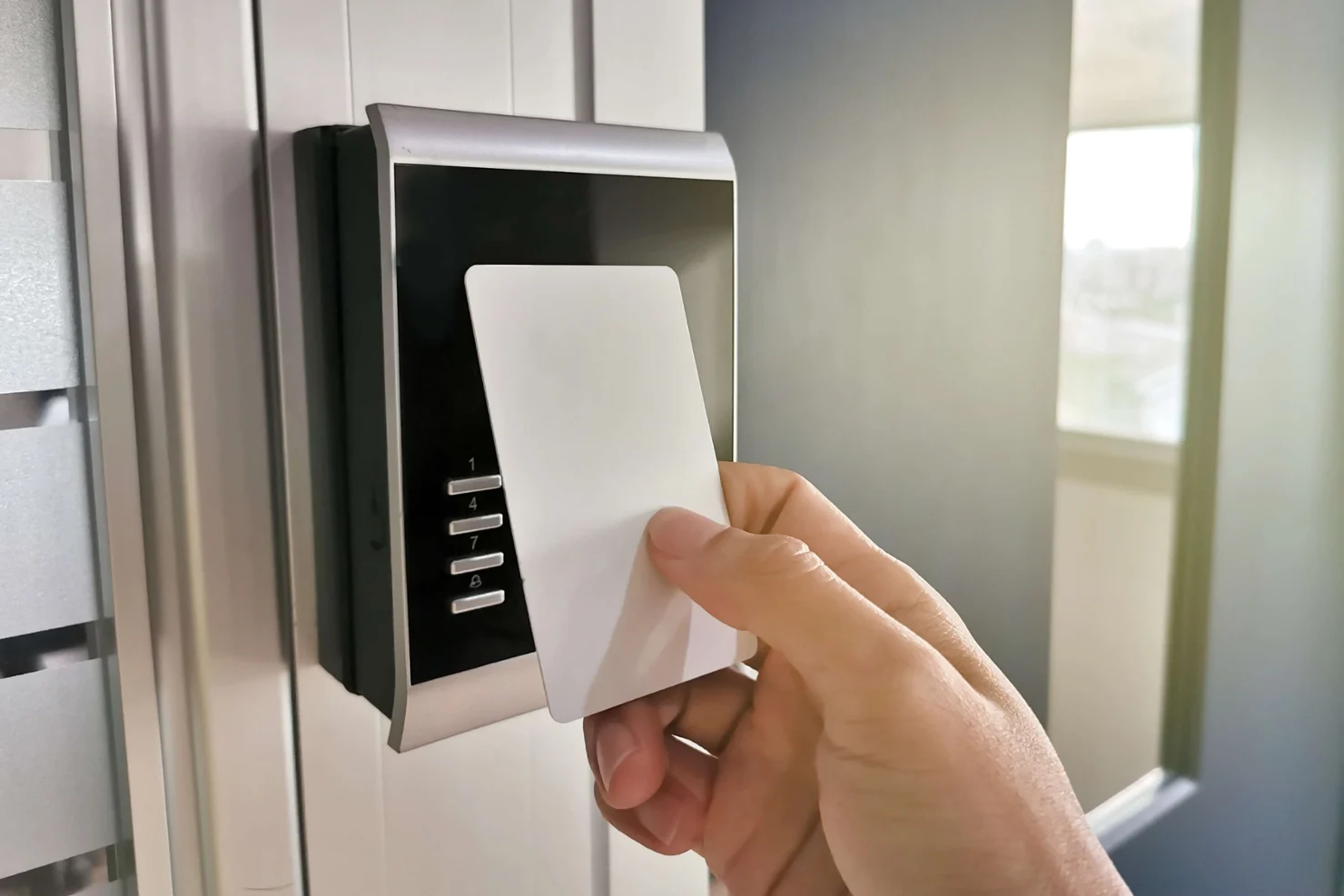
Card door access control systems use physical credentials like RFID cards, key fobs, or smart cards to grant entry. Users simply scan their card at an electronic reader to unlock doors.
Advantages of Card Door Access Control
- Cost-Effective Deployment: Card systems generally have a lower initial investment compared to biometric options.
- Scalability and Flexibility: Easily add or revoke users without replacing hardware. Lost or stolen cards can be quickly deactivated, maintaining security without disruption.
- Ease of Use: Most people are familiar with cards as access credentials, ensuring smooth adoption.
- Integration Capabilities: Modern card systems can be integrated with other security solutions, including CCTV, alarm systems, and building management software.
- Audit Trail and Access Logs: Enables real-time monitoring and detailed records of who accessed which area and when, enhancing accountability.
Limitations of Door Access Systems to Consider
- Physical cards can be lost, stolen, or shared among unauthorized users.
- Cards can be susceptible to cloning if not using advanced encryption technology.
- Users must remember to carry their cards at all times.
Biometric vs. Card Door Access Control
Choosing between biometric and card door access control systems depends on your building’s security needs and budget. Each system offers unique advantages to consider before making a decision.
| Feature | Biometric Access Control | Card Access Control |
|---|---|---|
| Security Level | Very high; unique physical traits | Good, with encryption and control |
| Cost | Higher upfront, lower ongoing costs | Lower upfront and maintenance |
| Ease of Use | Hands-free, uses unique biological traits | Requires carrying physical cards |
| Risk of Unauthorized Access | Nearly impossible to duplicate or share | Cards can be shared or lost |
| Administrative Overhead | Lower (no physical items to replace) | Moderate (card replacements, etc.) |
| Integration Capability | High, often combined with cards for 2FA | High (CCTV, alarms, payroll) |
| User Throughput Speed | Very fast (seconds) | Fast |
Which Door Access System is Right for Your Building?
Choosing the best door access control method depends on your building’s security requirements, budget, and user convenience priorities.
- For large office complexes or multi-tenant buildings where numerous users require easy onboarding and flexibility, card access control offers scalable, user-friendly security.
- For high-security areas such as labs, data centers, or restricted government buildings, biometric systems provide a superior level of protection with precise identity verification.
- Some businesses opt for hybrid solutions, combining cards and biometrics to benefit from both convenience and heightened security.
Making an Informed Decision
- Card access control is a cost-effective, flexible option ideal for many commercial environments.
- Biometric access control maximizes security where tight identity verification is critical.
- Hybrid systems provide the best of both worlds for buildings with diverse access needs.
Whichever you choose, prioritizing advanced technology and trusted suppliers ensures a safer, smarter building environment.
Frequently Asked Questions
- What is the biggest security risk with card access control?
Loss, theft, or cloning of cards can allow unauthorized access. Encryption helps but risks remain higher than biometrics. - Are biometric access control systems truly more secure than card systems?
Yes. Biometrics use unique physical traits, making credentials almost impossible to duplicate, share, or lose. - Which access control type is more cost-effective for most businesses: cards or biometrics?
Card systems have lower upfront and maintenance costs; biometrics have higher initial costs but lower ongoing admin. - Can card and biometric access control be used together?
Yes. Combining both methods offers two-factor authentication for greater security in high-risk areas.