Mastering the Internet of Things (IoT): A Comprehensive Guide to Security and Efficiency
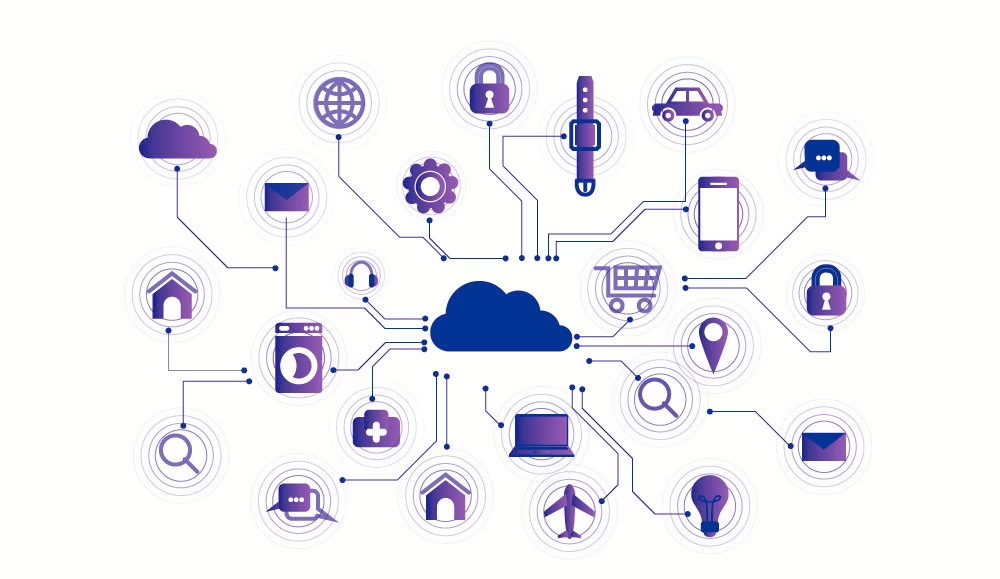
The Internet of Things (IoT) refers to any device or machine capable of transferring data over a network without requiring human-to-human or human-to-computer interaction. Essentially, IoT encompasses any device that can connect to the Internet. These devices include smart home security systems, Internet-connected household appliances, home energy monitoring and control systems, smartwatches, and smart TVs.
IoT Beyond the Household
IoT is not limited to household use. Many organizations across various industries leverage IoT to operate more efficiently, understand customers better, deliver enhanced customer service, improve decision-making, and ultimately increase business value. According to TechTarget, the applications of IoT are vast and transformative.
Security Risks and Vulnerabilities
IoT devices are often easy targets for hackers due to their traditionally weak security measures. These devices frequently remain unpatched for extended periods, and default administrative passwords are often left unchanged. Unlike computers, most IoT devices lack robust antivirus software, making them more susceptible to breaches.
Securing Your IoT Devices
To mitigate these risks, consider the following tips:
Conclusion
By following these guidelines, you can significantly reduce the IoT risks you face both personally and professionally. Staying informed and proactive about IoT security is crucial in today’s interconnected world.