The Ultimate Guide to Selecting the Perfect Alarm System for Your Retail Store
Why Alarm Systems are Essential for Every Retail Store
Retail security has evolved beyond merely locking doors at closing time. With the advent of smarter technologies, selecting the right alarm system has become a vital aspect of daily operations. A modern alarm setup not only deters intrusions but also enhances employee safety, operational control, and long-term scalability. This guide will help you understand the key steps to build a system that integrates seamlessly with your business, providing comprehensive protection.
Retailers face a wide range of security challenges and threats. Alarm systems are crucial for:
Ensuring staff safety, particularly for stores operating late hours
Acting as deterrents to unauthorized entry
Minimizing potential downtime and operational disruption
Reducing insurance costs (some insurers offer discounts for monitored alarms)
Supporting faster emergency response during incidents
Choosing the Right Alarm System for Your Retail Store
The best alarm systems are tailored to your store’s unique needs. To choose the right setup, understand your store’s specific requirements, identify potential security gaps, and align features with your operational priorities. Follow these steps to select the right solution:
Step 1: Assess Your Retail Store’s Risk Profile
Before choosing an alarm system, understand what you are protecting and from whom. A security risk assessment helps you decide the right features, coverage areas, and technology required. Ask yourself:
What are my store’s most vulnerable entry points? (e.g., back doors, glass storefronts, side exits)
What kind of inventory do I carry? (Small, high-value items may need more sensors and CCTV integration)
Are there any potential fire risks in my store layout or operations? (If you have flammable materials, electrical equipment, or cooking appliances, smoke and heat detectors are essential.)
What are my store hours? (After-hours protection is crucial for stores that close overnight)
Do I have a history of theft or break-ins? (Use past incidents to inform your future setup.)
How many staff members have access to keys or alarm codes? (More access points may need better access control.)
Step 2: Understand the Types of Retail Alarm Systems
Different alarm systems offer varying levels of protection. Understanding the available types helps you choose the best match for your store layout, business scale, and long-term plans. Consider the following types:
Burglar Alarm Systems: Detect unauthorized entry using motion sensors and contact points.
Wireless Alarm Systems: Offer the same functionality as traditional systems but with easier, cable-free installation and greater flexibility.
Fire Alarm Systems: Provide early alerts through smoke and heat detectors to help prevent fire-related damage.
Step 3: Key Features to Look For in a Modern Alarm System
A modern retail alarm system should offer multi-layered protection, combining intrusion alerts, fire detection, emergency response features, and real-time connectivity. Key features to consider include:
Motion Sensors: Infrared motion detectors sense movement in secured areas after hours, useful for covering sales floors, stockrooms, and storage areas.
Door or Window Contact Sensors: Detect when an entrance is opened, immediately triggering alerts. Essential for all external access points.
Glass Break Detectors: Specialized acoustic sensors detect the high-frequency sound of breaking glass, critical for retail shops with large window displays.
Smoke Detectors: Early warning systems that detect rising temperatures or smoke particles, vital for preventing fire-related damage.
Audible Sirens: Loud alarms deter intruders and attract attention from passersby or neighboring stores. Some systems include strobe lights for visual warning.
24/7 Monitoring Service: Monitored systems connect to a security team that verifies alerts, contacts you, and dispatches emergency services if needed, reducing false alarms and improving emergency response accuracy.
Step 4: Integration with Other Retail Technologies
Alarm systems become more powerful when integrated with other retail systems. Here’s how your alarm system can work in tandem with broader security infrastructure:
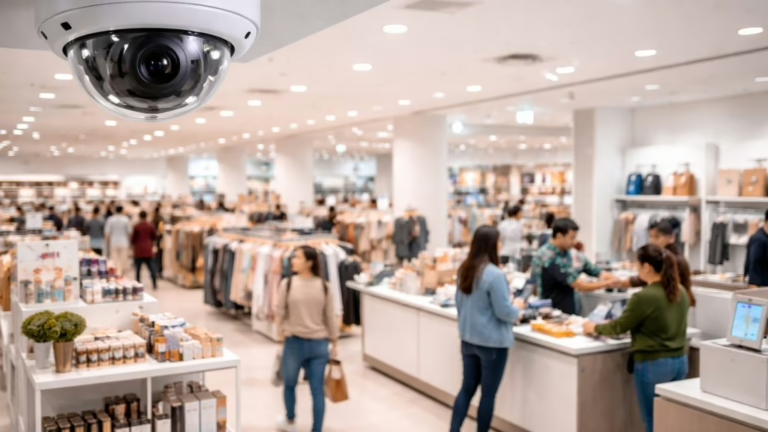
CCTV Integration: Modern alarm systems can be seamlessly integrated with your CCTV network to enhance situational awareness. CCTV cameras can record or send a live video feed directly to your mobile app or monitoring center, providing real-time footage invaluable for visual verification of threats, capturing intruder activity, and providing evidence for insurance claims or police investigations.
Access Control Integration: Integrating an access control systemwith your alarm system allows you to manage who can enter specific parts of your store and when. With keycards, biometric readers, or PIN codes, you can restrict access to sensitive areas, set schedules for authorized staff, keep an audit trail of every entry and exit, and revoke access instantly if needed.
Step 5: Scalability and Future-Proofing
Security needs to evolve as your business grows. A good alarm system should grow with you. Look for:
Modular Design: Add more sensors, cameras, or panels without a full overhaul.
Software Updates: Choose systems that receive regular security patches and upgrades.
Cloud Support: Allows centralized access to alarms across multiple branches or stores.
Cross-Branch Visibility: Ideal for chain stores needing unified control.
Having a future-ready system can save time and costs in the long run by adapting to both physical and operational changes.
Step 6: Working with a Trusted Provider
Even the most advanced alarm systems need proper installation, setup, and after-sales support to work effectively. It’s important to work with a security provider that understands the local landscape and delivers when it matters most.