What are Biometric Security Systems

What are Biometric Security Systems?

Biometric security systems provide advanced identity verification by analyzing unique physical and behavioral characteristics, such as fingerprints, facial features, iris patterns, and voice recognition. Unlike traditional methods like passwords or keycards—which are vulnerable to theft and duplication—biometric technology delivers a superior level of reliable and personalized protection that cannot be easily compromised.

What is Biometrics and How Does It Work?

Biometrics is the science of measuring and analyzing the physical or behavioral characteristics of individuals. Biometrics starts from the fact that humans have characteristics that are distinguishable from others. Such as fingerprints, facial features, iris patterns, tone of voice and hand geometry anatomical features it can be counted among. Signing style, walking style and keyboard usage behavioral characteristics it can be counted among.

Unlike traditional authentication methods, biometric measurements unforgettable, unlost and unpredictable he has qualities. Biometric technologies digitize these features a unique biometric template creates. The template creation process occurs by defining the distinguishing points of each biometric property and processing them through a mathematical algorithm. 

For example, details such as bifurcating lines and endpoints can be decisive in fingerprints. In facial recognition, measurable features such as distance between the eyes, nose width and jaw structure are used. In addition to determining the uniqueness of the individual, biometrics also ensures the invariance and measurability of these data over time.

What are Biometric Security Systems?

Biometric security systems are technological solutions that authenticate people using their physical or behavioral characteristics. These systems provide access control by recognizing innate biological or behavioral characteristics specific to each individual. Biometric security systems data collection, processing, storage and comparison it consists of four basic components. Sensors and readers enable the collection of biometric data. Software components take the collected data, evaluate its quality and turn it into a template. 

Created templates are stored in secure databases and used as reference points for authentication. The comparison engine decides on access by performing match analysis between live sampling and recorded templates. Biometric security systems are becoming smarter every day. More than one feature is now used together to improve security, rather than just a single biometric feature. For example, facial recognition and fingerprint reader the combination of systems provides much stronger security than systems based on a stand-alone feature.

Traditional SecurityBiometric Security
PasswordsFinger mark
PIN CodesFace Recognition
Smart CardsIris Scanning
KeysVoice Recognition
Identity DocumentsVein Recognition
The fullersHand geometry
It can be easily forgotten/lostUnforgettable/Interlivable
Shareable/playableUnshareable/hard to copy
Low security levelHigh level of security
Low costHigh initial cost

How Do Biometric Security Systems Work?

Biometric security systems work by translating the physical characteristics unique to each person into digital patterns. Although it sounds complicated, it actually runs a systematic algorithm process in the background. In the first step, a recording process is carried out to make the system work. At this stage, biometric data such as fingerprints, face or iris are collected, quality checked and converted into a digital template. The created templates are stored in a secure environment to be used for later authentication. During the verification phase, when the user wants to access the system, he presents his biometric data again. The system receives this new data, processes it and compares it with the pre-recorded digital template. This comparison is made based on a certain similarity rate rather than a one-to-one match. Each system has a minimum threshold value that it agrees to recognize. If new data exceeds this threshold, the system recognizes the person and grants access.

To ensure accuracy in this process, two basic error metrics are taken into account: Incorrect Acceptance Rate (FAR) and Incorrect Rejection Rate (FRR). HEADLIGHT it indicates the possibility of accidental admission by a person who is not authorized to the system. FRR it refers to the risk of erroneous rejection by an authorized person. Advanced systems are constantly calibrated to operate at a balanced point between these two ratios. To take security one step further, biometric systems are often used as part of a multi-factor authentication structure. For example, some organizations require authentication not only with a fingerprint but also with a smart card.

Biometric Security System Types

Physical Biometric Systems

Physical biometric systems are built on the unique anatomical features of our body. These systems are based on innate physical characteristics that remain relatively unchanged throughout life.

  • Fingerprint Recognition: It is one of the most widely used and mature biometric technologies. The branch points and top patterns of each fingerprint are recorded. On smartphones, in bank vaults, personnel attendance control systems and it can be used on security doors.
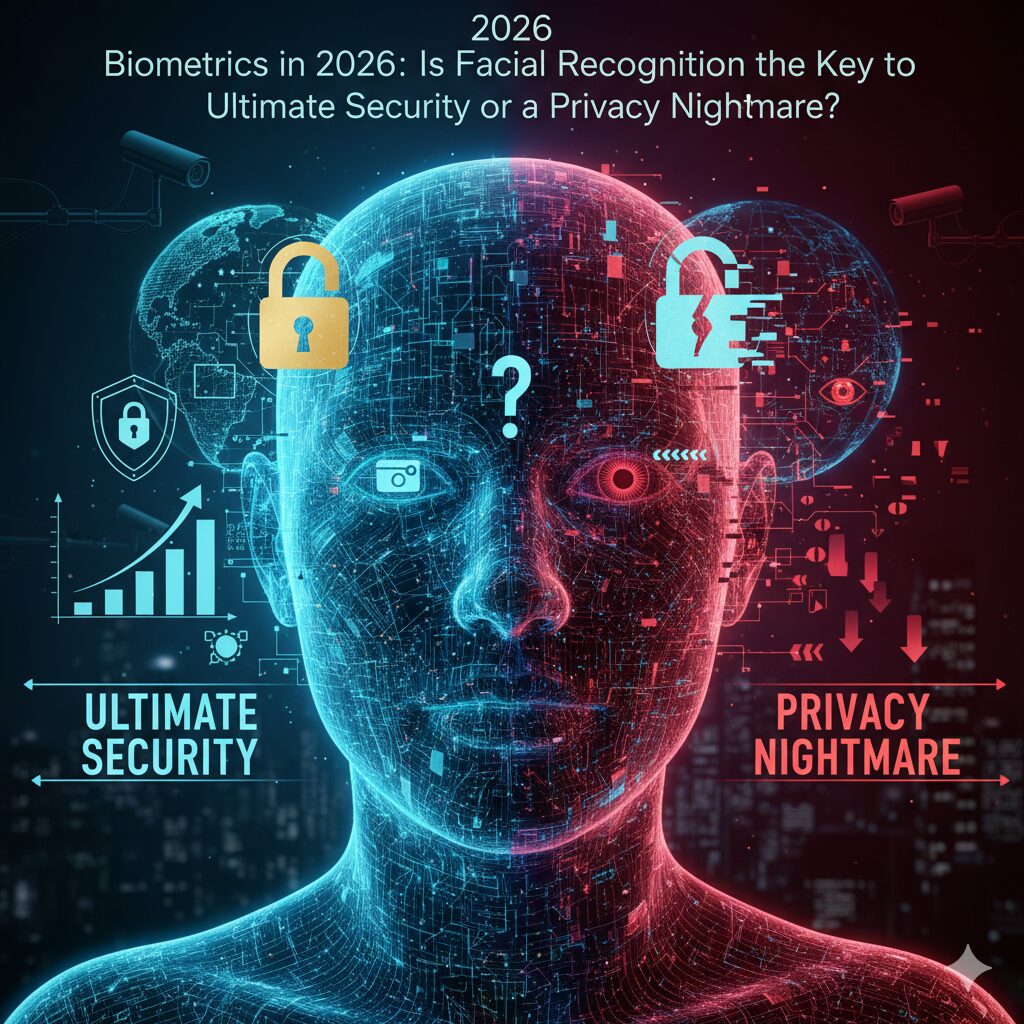
  • Facial Recognition: It is a system based on measuring facial features through cameras. The person’s identity is confirmed by analyzing approximately 80 different points such as distance between the eyes, nose width, and jaw structure. It is used in unlocking systems of smartphones and airport security.
  • Iris and Retina Scan: They are high security systems that use unique patterns of the iris and retina structure of the eye. Iris recognition analyzes patterns in the colored part of the eye. A retinal scan examines the arrangement of blood vessels in the eye. It is preferred in military facilities and high security data centers.
  • Vein Recognition: These are systems that display the vascular structure in the hand, finger or palm using infrared technology. Its use in banking transactions and the healthcare sector is increasing.
  • Hand Geometry: These are systems based on measuring features such as hand size, finger length, joint width. It is preferred in certain environments because it is easy to use and low cost.

Behavioral Biometric Systems

Behavioral biometric systems authenticate people by recognizing their characteristic behavioral patterns. These systems focus on behavioral traits that can change over time but are still distinctive.

  • Voice Recognition: They are systems based on analyzing the tone of voice, frequency and speech rhythm during speech. Sound signatures created by taking sound samples reflect the person’s unique vocal characteristics. It is used in telephone banking and call centers.
  • Signature Recognition: It analyzes the dynamic features that a person applies when signing, such as pressure, speed, rhythm and pen movement. Static signature recognition only evaluates the image of the signature. Dynamic signature recognition records the entire signing process. It is used in the financial sector.
  • Walking Recognition: These are systems based on analyzing the person’s walking style, step length, body swing and speed. It provides an advantage in cases requiring remote authentication. It is especially used to detect suspicious people in security camera systems.
  • Keyboard Strike Dynamics: It analyzes features such as a person’s typing speed, rhythm, key press time and key-to-key transition time on the keyboard. In systems that require constant authentication, the user can continue to authenticate even while typing. It is preferred in corporate online systems and database access.

Biometric Security Systems Usage Areas

Biometric security systems are used in a variety of industries thanks to their unique authentication capabilities. The safety and efficiency advantages provided by these technologies offer attractive solutions to organizations in different fields.

  • Corporate Security: Companies prefer biometric systems to control access to physical facilities, secure access to computer systems, and protect sensitive documents. It is used in areas where high security measures are required, such as data centers, R&D laboratories and senior executive offices.
  • Financial Sector: Banks and financial institutions can use it in ATMs, branch security, mobile banking applications and fraud prevention systems. Fingerprint and facial recognition technologies are becoming widespread in online banking to reduce the risk of identity theft.
  • Health Sector: Hospitals and healthcare organizations use biometric systems to ensure the accuracy of patient records, reduce drug management errors, and control access to sensitive medical data. 
  • Public Safety: In public areas such as airports, border checkpoints, stadiums and public transport terminals, biometric systems may be preferred to increase security and increase efficiency. e-Passport applications and national identity systems are also based on biometric technologies.
  • Human Resources Management: HR departments can use biometric systems in various processes in recruitment processes and personnel attendance tracking. Fingerprint or facial recognition technologies in overtime tracking systems can give more accurate results than traditional card printing systems. Biometric verification can be used for authentication purposes during recruitment processes for sensitive positions.

Advantages of Biometric Security Systems

Biometric security systems offer significant advantages over conventional authentication methods. 

  • Biometric systems offer advantages by providing a superior level of security. 
  • Biometric properties cannot be forgotten like passwords or lost like ID cards.
  • They are very difficult to imitate. It strengthens the protection of sensitive data and physical spaces by significantly reducing the risk of identity theft and unauthorized access.
  • From a user experience perspective, biometric systems provide convenience by eliminating the need for password recall. 
  • Procedures such as fingerprint reading or facial recognition are completed in seconds and do not require the user to memorize any information. An increase in efficiency can be observed when these systems are used in institutions that require access to a large number of systems. 
  • From a cost perspective, the initial installation cost of biometric systems can be high, but they offer operational advantages in the long run.
  • Reduces costs from password reset, lost card replacement and security breaches. 

Things to Consider in Biometric Security Systems

In order for biometric security systems to operate effectively and safely, well-thought-out planning and a holistic approach are required. In order for systems to reach high security standards, some important points must be carefully evaluated. 

  • Privacy comes first in biometric security systems. Because these systems work with data that directly reflects the identity of people and cannot be changed. 
  • Before collecting biometric data, the user should be informed clearly and understandably, and his explicit consent must be obtained. The data collected must be securely encrypted, accessible only to authorized persons, and undergo regular security audits.
  • Legal compliance is also an indispensable part of these systems. International regulations, especially the Personal Data Protection Law (KVKK) in Turkey, set clear rules on how biometric data will be collected, processed and stored. 
  • People who will implement systems, such as human resources managers, must fulfill all legal obligations by working closely with legal advisors.
  • System reliability and fault tolerance are technical considerations. No biometric system is 100% error-free. Each system has a specific Misacceptance Rate (FAR) and False Rejection Rate (FRR). These rates determine the balance between the system’s security level and user experience. 
  • Lower FAR may be preferred for areas requiring critical security. In applications where user experience is important, it is important to have a balanced approach.
  • When installing a new biometric system, users should be shown in detail how the system works, how their data is protected and why this technology is adopted. 
  • In order for biometric systems to operate at better performance, regular maintenance and updates are required.

Frequently Asked Questions

How Safely Is Biometric Data Stored?

Biometric data is generally stored in encrypted format and not in raw form. Modern systems create biometric templates that cannot be recycled to original biometric data. In some advanced systems, data can be stored on the user’s own device rather than a central database. By security standards, end-to-end encryption is used when transmitting data and database access is restricted by strict authorization policies.

How Are Failure Rates of Biometric Systems Evaluated?

Failure rates of biometric systems are measured by the FAR (False Acceptance Rate) and FRR (False Rejection Rate) metrics. FAR indicates the likelihood of an unauthorized person being mistakenly accepted by the system; Low FAR means higher security. FRR refers to the possibility of an authorized person being accidentally rejected by the system; Low FRR provides better user experience. The intersection between these two metrics is called “Equal Error Rate” (EER) and is used to evaluate the overall performance of the system. In modern biometric systems, the EER is usually below 1’%.

Similar Posts

  • What are Access Control Systems? How to Choose?

    Access control systems are security solutions that determine who can enter a place or area, when and under what conditions. These systems are used to ensure the security of businesses, institutions and facilities by preventing unauthorized access. Modern access control systems provide effective protection by combining physical security measures with digital technologies.