What is an X-Ray Device? Where is it used?
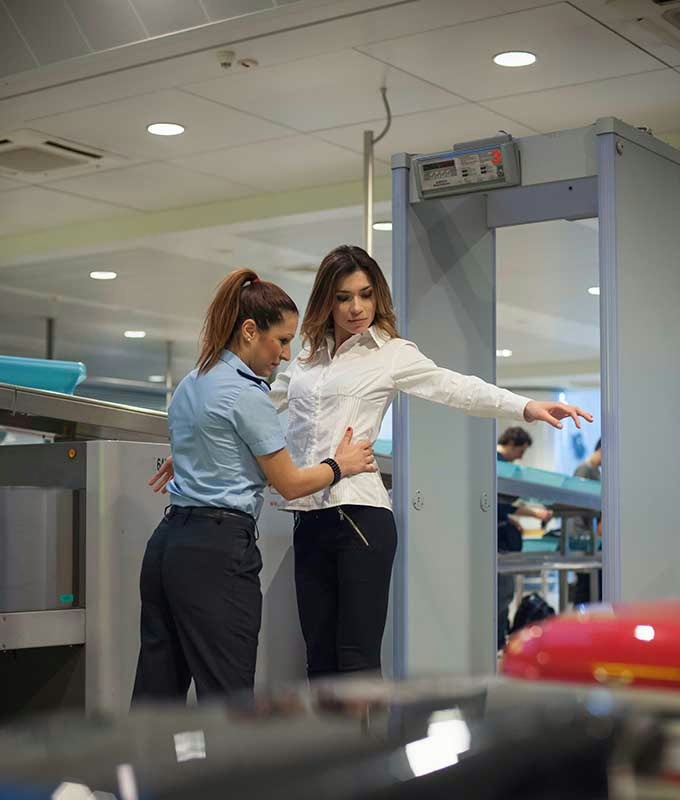
X-ray devices, which have an important place in modern security systems, stand out especially with their ability to detect threats quickly and effectively. These devices, which are used in many areas from airports to public buildings, from courthouses to private security points, are of great importance in terms of both ensuring life safety and accelerating operational processes. We have discussed the types and usage areas of x-ray devices in this content.
What is an X-Ray Device?
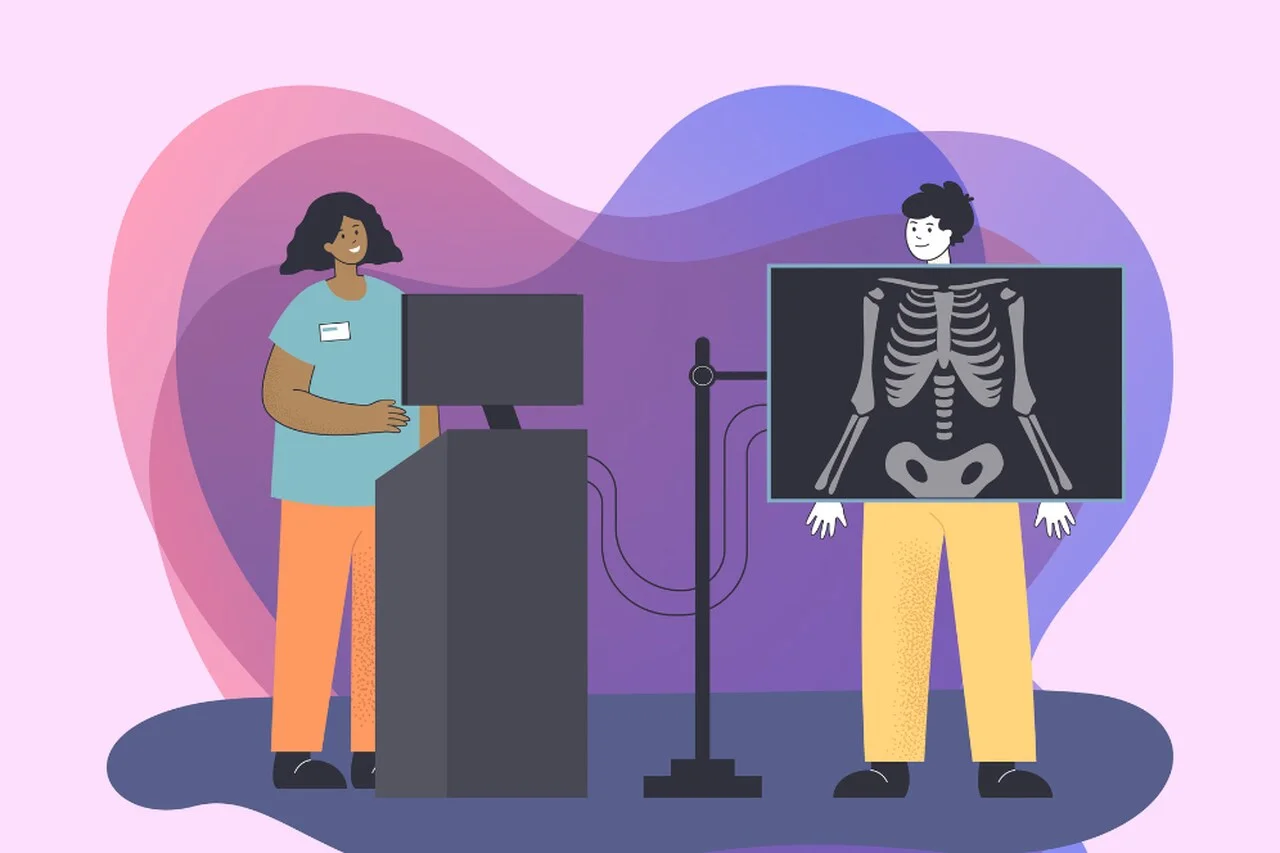
The X-ray device is an advanced technology that works silently in many areas of our lives. These systems, whose foundations were laid with the discovery of Wilhelm Röntgen in 1895’, have undergone a great transformation over time. X-ray devices make invisible internal structures visible thanks to high-energy electromagnetic waves.
At the heart of these devices is that electrons emitted from the cathode hit the anode and produce X-ray radiation. These rays are absorbed at different rates depending on the density of the objects and create images with distinct contrasts in the detectors. Digital X-ray systems process this data instantly; Thus, it offers real-time analysis to security operators or technicians.
These systems, which generally operate between 80-150 kV, are strong enough to scan materials of different thicknesses. In addition, thanks to advanced filtering technologies, unnecessary radiation is prevented and image quality is maximized.
X-Ray Device Types and Features
X-ray device types have different technical features depending on their intended use. Each type of device is designed according to specific security needs.
In this way, it works most efficiently in different environments such as airports, public buildings, factories or logistics centers. This diversity makes it possible to both meet operational requirements and offer solutions that comply with budget constraints. Free time X-ray devices you can easily find the model that suits your needs.
Compact and Medium Scale Systems
Compact X-ray systems designed for limited space requirements. They perform ideally in small office buildings, medical facilities and educational institutions. It provides basic threat detection using single-energy scanning technology, but advanced material separation capabilities are limited. Installation requirements are minimal and standard electrical infrastructure (220V/16A) is sufficient.
Medium scale systems it offers a cost-effective solution for mid-level security applications. With advanced image processing algorithms, threat detection accuracy reaches 92’%. Conveyor speed adjustment (0.2-0.4 m/s) provides process capacity optimization.
May be suitable for government buildings, corporate headquarters and medium-sized events. Systems in this category are designed for three-shift operation and daily maintenance requirements are kept minimal. Automatic self-recognition reduces the need for technical intervention.
Industrial and High Performance Systems
Industrial X-ray devices designed for high volume security screening operations. Advanced threat detection algorithms identify explosives and weapon configurations with 97% accuracy. Multi-energy imaging capability realizes organic and inorganic material classification in real time.
These systems used in airport security applications ECAC standard compatibility it requires and offers uninterrupted operation capability. Redundant component design increases system availability. Integrated conveyor systems automatically separate suspicious items with automatic deflection mechanisms.
Multi-energy systems are important in new generation security technology. Dual energy scanning reduces false alarm rates by improving material separation. Artificial intelligence integration improves suspicious pattern recognition and significantly reduces workload.
Portable and Customized Solutions
Portable X-ray systems provides critical capability for tactical security operations. Portable units are deployed in emergency response scenarios, temporary events and remote locations. Battery operation offers 4-6 hours of uninterrupted scanning and solar charging options are available.
On-vehicle X-ray systems create a strategic advantage in border control and checkpoint applications. These mobile platforms maximize operational flexibility with fast deployment capability (15 minutes installation time). Remote control capability increases operator safety in critical environments.
Custom configurations are customized for unique operational requirements. Water-resistant dredging systems have been developed for marine safety applications. Explosion-proof variants ensure safe operation in hazardous environments. Custom integration projects ensure perfect compatibility with existing security infrastructure.
Usage Areas of X-Ray Devices
X-ray technologies offer a much wider range of applications than expected. Beyond traditional security controls, it plays important roles in various sectors and develops strategic solutions that increase operational efficiency.
Critical Security Sectors
The luggage of millions of passengers is scanned at airports and the accuracy of these systems is of great importance. Advanced tomography technology in line with next-generation standards significantly changes the passenger experience by removing fluid restrictions. Mega centers such as Istanbul Airport use integrated X-ray systems with a luggage processing capacity of 36,000 per hour.
Types of x-ray devices in judicial institutions and prisons are optimized according to different levels of security. Systems used in high security facilities detect threats in a spectrum ranging from letter size to human body scanner. In these applications, the error rate is kept below 2’%, which increases personnel safety and maintains operational fluidity.
Industrial Quality Control Applications
In the food safety industry, X-ray technology is one of the critical checkpoints of HACCP protocols. Metal particles, glass shards, bone fragments and density anomalies are detected with an accuracy of 0.5mm. For example, in chocolate production, even metal contamination in cocoa butter is reliably determined. These systems are capable of processing 600 products per minute on the production line.
In the automotive industry, resource quality control forms the basis of safety standards. X-ray inspection systems analyze porosity, crack formation and penetration deficiencies at critical ports with micron precision. In safety tests of electric vehicle battery packs, internal cell damage is evaluated by non-destructive testing method.
Logistics and Cargo Security
In modern logistics centers, X-ray scanning forms the backbone of supply chain security. With the e-commerce boom, automated X-ray systems operate uninterruptedly 24/7 in facilities with daily cargo volumes exceeding 50 million.
Artificial intelligence-supported image analysis reduces human operator load by detecting suspicious content with 96% accuracy. This technology accelerates customs clearance and aims to reduce compliance risks, especially in cross-border e-commerce.
What Appears on the X-Ray Device
Modern X-ray systems have the ability to distinguish different material densities and clearly display these differences with color codes on the screen.
Images can be interpreted as follows:
This color separation allows operators to quickly detect suspicious objects. Advanced systems not only display images. In addition, thanks to artificial intelligence-supported algorithms, it can automatically detect dangerous object forms such as weapons, explosives and cutting tools. This automation reduces dependence on the operator’s interpretation while also significantly reducing the margin of error.
X-Ray Device Advantages
X-ray scanning systems reduce the need for physical search by an average of 80%. In this way, both time savings and personal privacy violations are minimized.
This multi-layered security approach offered by X-ray technology has become indispensable in terms of reducing risk and accelerating the process, especially in crowded areas.
From a human resources perspective looking at it, X-ray technology has revolutionized employee safety and operational efficiency. It has become an indispensable component of risk management strategies.
Employee engagement and for its safety, X-ray scanning systems reduce personnel safety risks by eliminating the need for physical searches. By preventing direct contact of security personnel with suspicious objects, it dramatically reduces the likelihood of a work accident.
In the field of labor efficiency, automated scanning processes provide human resource optimization. It offers 300% faster processing capacity compared to traditional manual controls. This creates flexibility in personnel planning and reduces operational costs.
In the context of compliance and legal obligations, X-ray systems offer documentation and traceability. All scanning processes are digitally recorded, which has evidence value in legal processes. Personal information security is guaranteed with KVKK compliant data protection protocols.
In return on investment calculations3-5 years depreciation period of X-ray devices exhibits values in accordance with security industry standards. Providing a 15-25% discount on insurance premiums creates economic value.
In modern workplaces, security technologies are positioned not only for protection but also as operational efficiency tools.
X-Ray Device Maintenance and Technical Support Requirements
The long-lasting and efficient operation of X-ray devices depends on regular and conscious maintenance processes. Preventive (preventive) maintenance strategies that come into play at this point not only prevent unexpected malfunctions, but also significantly extend the overall life of the device. A properly implemented maintenance plan can prevent 90’% of device malfunctions and extend lifespan up to 15-20 years, normally ranging from 8-12 years.
Moreover, this approach directly affects not only technical performance but also cost efficiency. In cost calculations, preventive maintenance investments reduce operational expenses. This means a sustainable investment that both protects the budget and guarantees operational continuity.
Preventive Maintenance Protocols and Operational Processes
Daily care routines start with a 15-minute systematic checklist at the beginning of the shift. Conveyor belt cleaning and speed calibration maintain process capacity efficiency and reduce the risk of jamming. Radiation leak tests are performed with a portable measuring device and measurement values are stored in regulatory compliance files. These tests are documented in accordance with OHS standards.
Image quality calibration is performed using standard test objects and compliance with ASTM E746 norms is assessed. Security lock systems verify the functionality of electromagnetic and mechanical components. The emergency stop button response time must be under 2 seconds, otherwise emergency maintenance will be triggered.
Monthly technical reviews require expert technician certification. X-ray tube current values are monitored within manufacturer specifications and the 10% deviation is determined as the critical threshold. Cooling system thermal management maintains the optimal operating temperature (18-24°C) band. Sensitivity testing of detector sensors is measured by DQE (Detective Quantum Efficiency) metrics.
Technical Personnel and Certification Requirements
Qualified technician staff requires completion of X-ray safety certification and manufacturer specific training. The position of chief technician has a minimum of 3 years of field experience and radiation safety officer qualifications. Annual renewal programs include evolving technology updates and regulatory compliance changes.
Annual comprehensive maintenance is carried out by third-party accredited service providers. In this process, the device’s compliance with IEC 62463 international safety standards is verified by independent inspection. Calibration certificates are verified by the metrology traceability chain and integrated into the quality management system documentation.
In terms of workforce planning, it is recommended to have a minimum of 2 certified technicians in the technical support team. Cross-training programs ensure operational continuity and eliminate the risk of single failure points. Emergency response protocols guarantee out-of-hours technical support access.
Digital Monitoring and Fault Prediction
It offers integration of X-ray systems, IoT sensors and cloud-based monitoring. Real-time diagnostics constantly monitors component performance metrics and predicts faults with anomaly detection algorithms. Machine learning models analyze historical maintenance data and recommend optimal service intervals.
Remote diagnostic capabilities reduce technical support response time from 4 hours to 45 minutes. Augmented reality troubleshooting tools enable technicians working in the field to carry out complex repair procedures efficiently. Spare parts inventory management is optimized with automatic reorder triggers and stock depletion is prevented.
Service level agreements guarantee high uptime and may require 48 hours of advance notice for scheduled maintenance. Warranty coverage may include extensive parts replacement and labor costs. Extended warranty options can be available for up to 7 years and provide full protection.
Frequently Asked Questions About X-Ray Device
Does the X-Ray Device Pose a Radiation Hazard?
Modern X-ray safety devices are designed in accordance with international radiation safety standards. Radiation leaking out of devices remains below the natural level already present in the environment. This means that even if you work near the device for a long time, there will be no risk to your health.
What Objects Can’t the X-Ray Device Detect?
Although x-ray technology is extremely advanced, it has some limitations. Detection performance may be reduced, especially in very low density materials, such as plastic explosives, liquid hazardous materials or small objects hidden between thin metal sheets. Therefore, most systems are supported by additional scanning methods.
How Long Does the X-Ray Device Installation Process Take?
Installation time varies depending on the type of device selected. Compact systems can usually be put into operation within 1-2 days. In industrial scale devices, installation may take up to 1-2 weeks with infrastructure preparation, personnel training and testing processes. The suitability of the electrical infrastructure and the physical conditions of the area are also among the factors affecting the duration.
How to Organize X-Ray Device Employee Training?
X-ray machine operators typically participate in a comprehensive 40-hour training program. This program includes technical use of the device, methods of interpreting images, suspicious object analysis and emergency procedures. Trainings are prepared in line with international security standards and theoretical knowledge is supported by practical applications.
What are the Alternative Security Measures When the X-Ray Device Malfunctions?
When the device is temporarily disabled, predefined backup security protocols come into play. These measures include manual bag control, scanning with metal detectors, and temporary access control systems. By making a situation-specific risk assessment, the operation can be sustained without minimizing the security level.