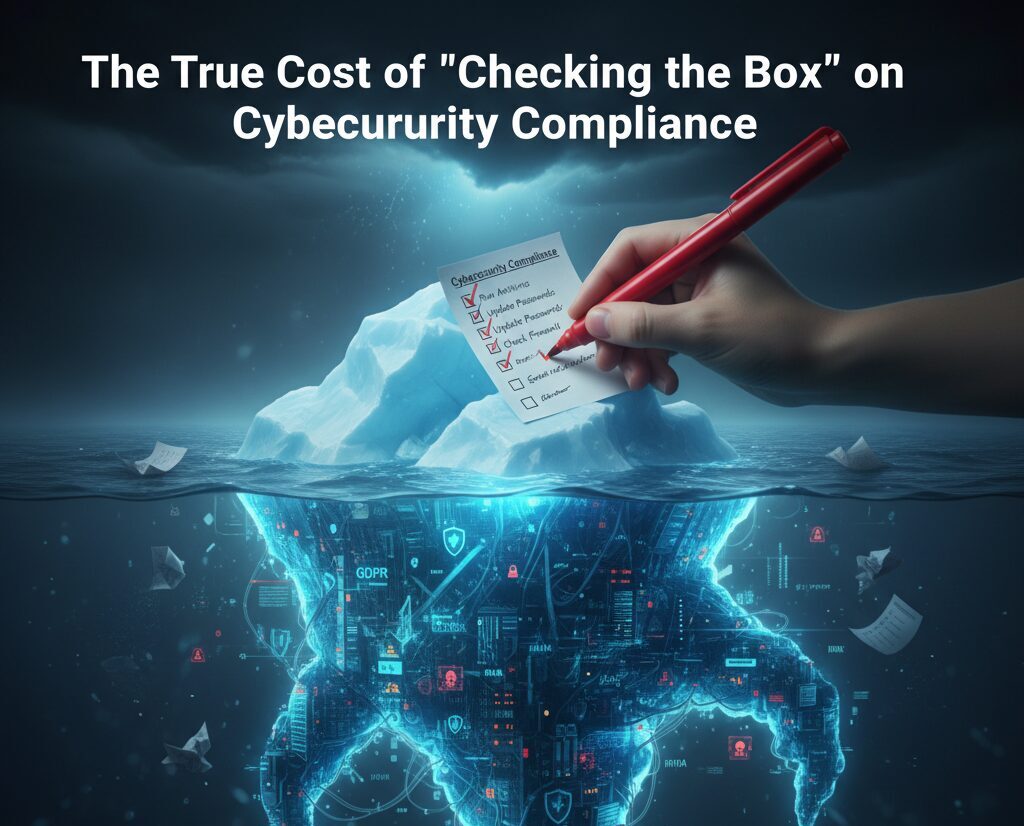
The True Cost of "Checking the Box" on Cybersecurity Compliance

The True Cost of “Checking the Box” on Cybersecurity Compliance

While Cybersecurity Compliance is a regulatory necessity, viewing it as the ultimate objective is a strategic failure. Relegating compliance to a purely administrative function creates a misalignment between perceived safety and actual risk posture. This “compliance-first” mentality fosters a false sense of security, leaving critical vulnerabilities within the defense architecture unaddressed. Furthermore, it results in significant budgetary inefficiency. For the modern CISO, distinguishing between regulatory adherence and genuine security resilience is paramount to avoiding the hidden costs of superficial compliance.


The False Economy of Compliance-Only Spending

The moment an organization focuses solely on meeting the minimum requirements of a framework (like HIPAA, GDPR, or SOC 2) without considering actual threat vectors, the security budget becomes an expense, not an investment.

  • Wasted Budget on Obsolete Controls: Budgets are frequently directed towards satisfying outdated or irrelevant controls simply because the Cybersecurity Compliance checklist mandates them, even if those controls do not address the organization’s current cloud-based or mobile-workforce risks.
  • The Compliance-Security Gap: Compliance frameworks often lag behind the sophistication of modern threats. An environment that is 100% compliant but lacks sophisticated technologies like Endpoint Detection and Response (EDR) or AI-driven threat intelligence is still highly vulnerable. Superficial Cybersecurity Compliance is not security.
  • Audit-Driven Panic: Organizations often scramble resources and spend vast sums in the lead-up to an audit, only to let controls degrade immediately afterward. This cycle of panic and neglect is an extremely inefficient way to manage the budget allocated for Cybersecurity Compliance.

The Cost of a Breach in a Compliant Environment

The most devastating cost of checking the box on Cybersecurity Compliance is the resulting breach. Compliance does not prevent sophisticated attacks.

  • Regulatory Fines are Not Waived: While compliance may mitigate some penalties, a data breach still triggers significant fines under regimes like GDPR or CCPA, even if the organization was deemed compliant on paper. Compliance is a defense against regulatory action, not against a hacker.
  • Reputational Damage: Customers and partners do not care about your compliance certificate; they care about data integrity. A breach in a compliant environment shatters trust, leading to customer churn and devastating reputational damage that far exceeds the initial fine.
  • Legal Liability: In post-breach litigation, attackers often argue that the organization’s adherence to Cybersecurity Compliance was the bare minimum standard, not a demonstration of due care. This exposes the company to greater liability.

Shifting from Compliance to Risk Management

The strategic CISO uses Cybersecurity Compliance as a floor, not a ceiling. The goal must shift from achieving a compliance checklist to managing true risk exposure.

  • Integrate Compliance and Risk: Leverage compliance frameworks to identify basic requirements, but use a risk-based approach to prioritize security spending. If an unaddressed threat poses a $5 million risk, the investment should match that threat, regardless of what the Cybersecurity Compliance framework specifically demands.
  • Automate Compliance Monitoring: Shift from manual, periodic checks to continuous monitoring. Tools that automatically map security controls to compliance mandates (like ISO 27001 or NIST) ensure controls remain active and consistent, transforming compliance from a manual burden into an automated byproduct of good security.
  • Invest in Resilience: Focus spending on capabilities that ensure business continuity, such as robust Incident Response (IR) planning, modern backup and recovery solutions, and advanced threat detection. True security resilience is the only way to genuinely satisfy the spirit—not just the letter—of Cybersecurity Compliance.

In conclusion, relying on superficial adherence to Cybersecurity Compliance is a costly gamble. It creates vulnerabilities, wastes capital on ineffective controls, and offers little defense against modern attackers. By making security a strategic driver and viewing compliance as a necessary outcome of effective risk management, organizations can eliminate the hidden costs and achieve true, measurable protection. In the digital-first era, data is often a company’s most valuable asset. But with great value comes great responsibility. For many businesses, terms like “GDPR,” “HIPAA,” or “PCI DSS” sound like a bureaucratic nightmare—a series of complex, expensive hurdles. It’s tempting to view cybersecurity compliance as just another “checkbox” to tick off.

But this perspective is dangerous.

In reality, cybersecurity compliance and regulations are not the goal; they are the baseline. They are the fundamental framework designed to protect your customers, your reputation, and your bottom line from catastrophic failure. Ignoring them, or treating them as a mere suggestion, is a high-stakes gamble you can’t afford to take.

This article explores why compliance is a critical pillar of a modern security strategy, not just a legal burden.


What Is Cybersecurity Compliance? (And What It’s Not)

It’s important to understand the difference between two key terms:

  • Security: This refers to the actual systems, tools, and processes you put in place to protect your assets. Think firewalls, antivirus, encryption, and security patrols (like us at The Secure Patrol).
  • Compliance: This is the proof that your security practices meet a specific setof standards mandated by a government, industry body, or internal policy. It’s the framework that holds your security accountable.

You can be “secure” without being “compliant” (though it’s rare). More frighteningly, you can be “compliant” without being truly “secure.” A company can check all the boxes on an audit form but still have a weak security culture.

A strong security posture, however, uses compliance as a roadmap to build a robust, defensible, and trustworthy operation.


Why Compliance Can’t Be Ignored

For businesses wondering why they should invest heavily in compliance, the motivations are crystal clear and stack up quickly.

1. Avoiding Crippling Financial Penalties

Regulators are no longer lenient. The fines for non-compliance are designed to be a deterrent, and they are succeeding.

  • GDPR: The EU’s General Data Protection Regulation can levy fines of up to €20 million or 4% of global annual revenue, whichever is higher.
  • HIPAA: In the healthcare sector, violations can cost millions of dollars per year, depending on the level of negligence.
  • PCI DSS: While not a law, failure to comply with payment card standards can result in fines from card brands and, worse, the revocation of your ability to process credit card payments.

2. Protecting Your Most Valuable Asset: Trust

A data breach is a public event. When customers trust you with their personal information, a breach feels like a personal betrayal. The cost of a breach isn’t just the fine; it’s the long-term reputational damage and customer churn that follows. Building trust is hard, but destroying it is frighteningly easy.

3. The Shift from “If” to “When”

The modern threat landscape is not a matter of if you will be targeted, but when. Compliance frameworks are built from the collective “lessons learned” of thousands of data breaches. They provide a proven playbook for:

  • Risk Management: Identifying your most critical assets and potential vulnerabilities.
  • Incident Response: Creating a clear plan of action for when a breach does occur, helping you contain the damage and recover faster.
  • Data Governance: Knowing what data you have, where it is, and why you have it.

A Quick Guide to the “Alphabet Soup” of Regulations

While the specific rules that apply to you depend on your industry and location, here are the most common frameworks businesses encounter:

  • GDPR (General Data Protection Regulation): If you handle the data of any EU citizen (even if your business is based in the U.S.), you must comply. It emphasizes data subject rights, consent, and privacy by design.
  • HIPAA (Health Insurance Portability and Accountability Act): A U.S. law that mandates strict standards for the protection of sensitive patient health information (PHI).
  • PCI DSS (Payment Card Industry Data Security Standard): A requirement for any organization that accepts, processes, stores, or transmits credit card information.
  • ISO/IEC 27001: An international standard for creating and managing an Information Security Management System (ISMS). Achieving this certification is a powerful, globally recognized way to demonstrate your commitment to security.

5 Practical Steps to Building a Compliant Security Program

Navigating this landscape can feel overwhelming. Here is a practical, step-by-step approach.

Step 1: Discover and Assess

You cannot protect what you do not know. The first step is a thorough risk assessment.

  • What sensitive data do you collect?
  • Where is it stored?
  • Who has access to it?
  • What regulations apply to your business?

Step 2: Establish Policies and Controls

Develop clear, written security policies. This isn’t just for a binder on a shelf; this is the rulebook for your entire company. This includes access control, password policies, data disposal, and acceptable use.

Step 3: Implement Your Controls

This is where technology and people meet. Implement your firewalls, endpoint detection, and encryption. Crucially, train your people. Your employees are a core part of your defense, and they must be trained to spot phishing attempts and follow security protocols.

Step 4: Monitor, Test, and Audit

Compliance is not a “set it and forget it” project. It is a continuous process.

  • Monitor your systems for suspicious activity (24/7).
  • Test your defenses with regular vulnerability scans and penetration testing.
  • Audit your controls internally and externally to prove they are working.

Step 5: Plan Your Response

Have an Incident Response Plan ready before you need it. Who do you call? How do you communicate with customers? How do you isolate the threat? A calm, prepared response can save your business.


Compliance Is Your Business Shield

Cybersecurity compliance and regulations are not the enemy. They are a strategic framework for managing risk in an increasingly hostile digital world. By embracing compliance, you are not just avoiding fines; you are building a more resilient, efficient, and trustworthy business. You are sending a clear message to your customers, partners, and competitors that you take security seriously.
Similar Posts

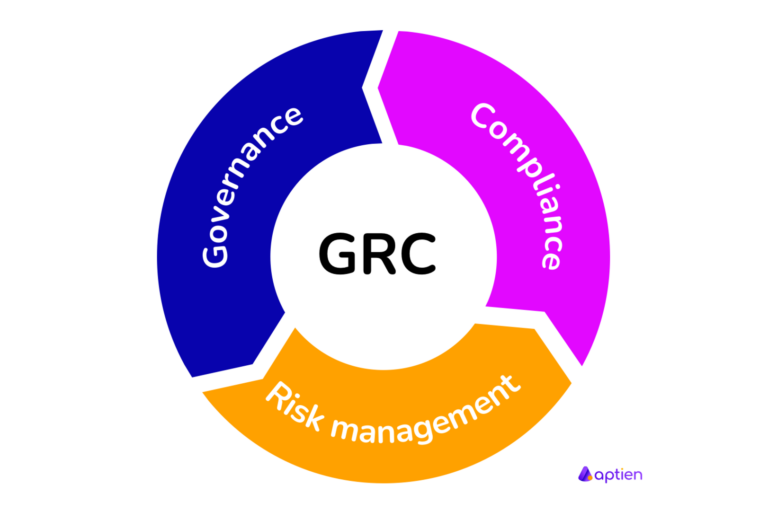
  • GRC – Governance, Risk, Compliance

    Security issues such as data breaches and cyber risks can lead to loss of your sensitive data, financial losses and damage to your reputation. Therefore, institutions need a comprehensive, integrated and sustainable framework to effectively manage these risks. GRC (Governance, Risk, Compliance); It is a holistic management approach that covers governance, risk management and compliance processes.

  • The Best Password Managers for 2025: LastPass vs 1Password – Our Head-to-Head Report

    Stop reusing passwords! We put LastPass vs 1Password head-to-head for security, features, and ease of use. The Secure Patrol’s 2025 verdict: Which password manager truly protects your digital life?

    Let’s talk about the weakest link in your digital security: your passwords.

    You’re probably reusing them. You’re probably making them too simple. And you’re probably writing them on a sticky note attached to your monitor. Don’t worry, you’re not alone. We all do it.

    But in 2025, with data breaches happening daily, having a dozen variations of “Password123!” across your bank, email, and social media accounts is practically an invitation for hackers.

  • Using Docker for Penetration Testing Experts

    Using Docker for Penetration Testing Experts, Docker’s, DevOps except it’s very attractive for you cyber security in the field of cyber security experts, penetration testers and black-white-blue-green-red… hat hackerwe see that they are preferred by ‘people and we recommend that they use them to do their job.

  • What is a Converged Security Professional and Why Is It the Next Big Career?

    In the modern enterprise, risk is no longer neatly divided between the physical and digital realms. A sophisticated attack today often begins with a cyber vulnerability and ends with a physical action, or vice-versa. This blurring of lines has created a massive demand for a new type of expert: the converged security professional. This role is rapidly becoming the next big career opportunity, focusing on integrating the often-siloed disciplines of physical security and cybersecurity into one cohesive risk management strategy. A true converged security approach recognizes that securing the server room is just as vital as securing the server itself.

  • Situational awareness training

    Situational Awareness Training Situational awareness training helps individuals and groups to better understand their environments and effectively utilize this information…