Understanding Firewall Devices and Their Types
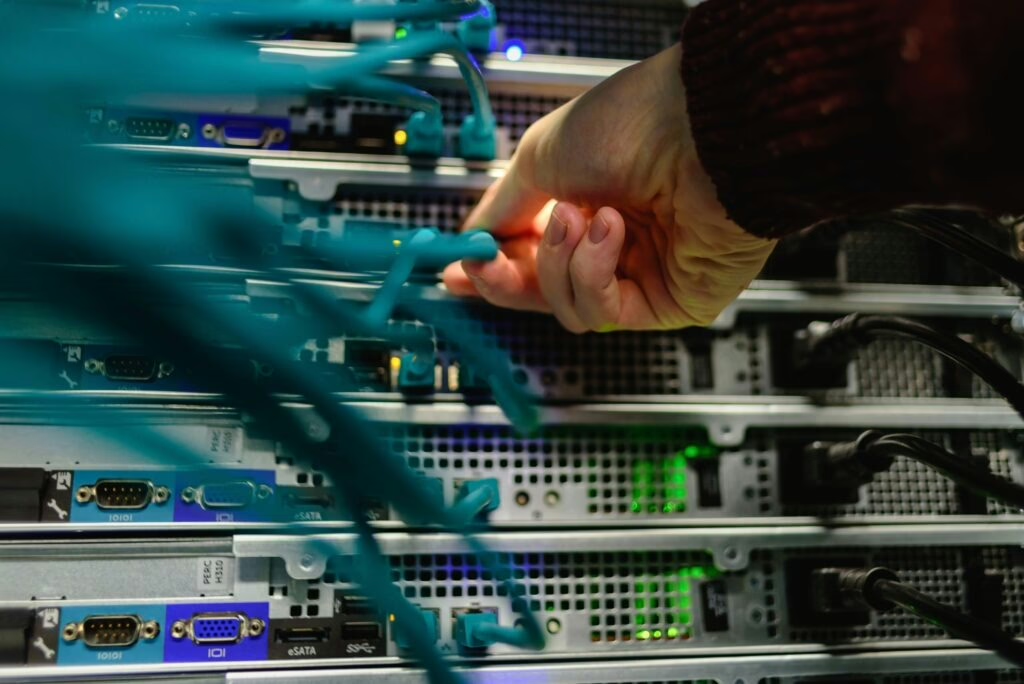
Firewall devices, often referred to as security gateways, serve as a critical security checkpoint between your computer or internal network and the external world. These security applications meticulously examine all incoming and outgoing packets, granting or denying access based on a predefined set of rules. Firewall devices can be hardware-based, presented as a physical device, or software-based, offering flexible solutions for various security needs.
How Firewalls Work
Firewalls scrutinize incoming and outgoing packets using one or more of the following methods:
- Packet filtering
- Stateful packet inspection
- User authentication
- Client application authentication
Firewalls filter packets based on parameters such as packet size, source IP address, protocol, and destination port. Both Linux and Windows operating systems come with built-in, basic firewall capabilities. These built-in firewalls can be configured to suit your needs, acting as a barrier between your operating system and Ethernet card.
Types of Firewalls
Firewalls come in various types, each with its own advantages and disadvantages. The primary types of firewalls include:
- Packet Filtering Firewalls
- Application Gateway Firewalls
- Circuit-Level Gateway Firewalls
- Stateful Packet Inspection Firewalls
Packet Filtering Firewalls
Packet filtering firewalls are the most basic type of firewall. They examine each incoming packet and only allow those that meet specific criteria to pass through. By default, incoming packets are denied unless explicitly permitted. Many operating systems, including Windows and various Linux distributions, come with basic packet filtering software.
Packet filtering firewalls can filter packets based on packet size, protocol used, source IP address, and other parameters. Some routers also offer this type of firewall protection in addition to their standard routing functions.
Packet filtering firewalls operate by examining the source address, destination address, source port, destination port, and protocol type of a packet. Based on these factors and the rules configured on the firewall, the packet is either allowed or denied passage.
While packet filtering firewalls are easy to configure and cost-effective, they have several disadvantages. They may fail to inspect a packet or confuse it with previous packets, making them susceptible to attacks like Ping floods or SYN floods. Additionally, they do not provide user authentication and only examine the packet header, lacking insight into the packet’s content.
Stateful Packet Inspection Firewalls
Stateful Packet Inspection (SPI) firewalls represent an advancement over basic packet filtering. These firewalls examine each packet and make access decisions based on the context of the conversation, including data from previous packets. This context-awareness provides an advantage over packet filtering firewalls, offering better protection against attacks like Ping floods, SYN floods, and IP spoofing.
SPI firewalls can detect abnormal packet flows from specific IP addresses, identify IP spoofing, and examine the actual content of packets, allowing for advanced filtering capabilities. Most modern firewalls use stateful packet inspection methods, making them a popular choice for enhanced security.
Application Gateway Firewalls
Application gateway firewalls, also known as application proxies or application-level proxies, are programs that run on a firewall. These firewalls negotiate with various application types to allow traffic to pass through the firewall. Unlike packet filtering firewalls, application gateway firewalls examine the client application and the server-side application it is trying to connect to, determining whether to allow traffic based on the application’s identity.
Conclusion
Understanding the different types of firewalls and their functionalities is crucial for selecting the right security solution for your needs. Whether you opt for a basic packet filtering firewall or an advanced stateful packet inspection firewall, each type offers unique benefits and protection levels. For more detailed information on how firewalls work, you can refer to authoritative sources like Privia Security.