Windows XP Source Code Leak: Unraveling the Security Risks and Impacts
Windows XP Source Code Leak: What You Need to Know
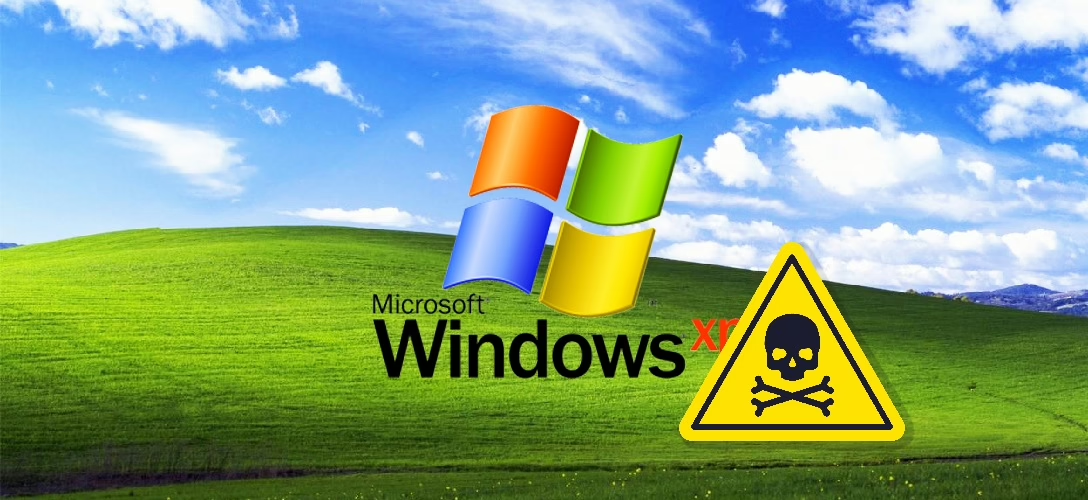
A significant data breach has occurred, with the Windows XP operating system’s source code allegedly leaked online. The leaker claims to have spent two months compiling leaked Microsoft source code, resulting in a 43 GB file published as a torrent on 4chan. This torrent reportedly contains not only Windows XP and Windows Server 2003 source code but also older versions of the operating system, including:
Microsoft is currently investigating the authenticity of the leaked codes. A Twitter user, NTDEV, has reported compiling the Windows source code and successfully running Windows, sharing photos and videos of the process and errors encountered.
The Impact of the Leak
The public availability of the source code could facilitate the discovery of exploitable vulnerabilities in Windows XP. If these codes are still used in modern Windows operating systems, it could also make it easier for attackers to find security vulnerabilities in modern Windows systems. However, modern security mechanisms are expected to mitigate this risk.
Security Warning for Businesses Using Fortinet VPN
SAM Seamless Network has warned that the default settings of the SSL used in Fortinet VPN software, which is used by over 200,000 business employees for remote connections, do not provide sufficient protection. This makes businesses vulnerable to “Man in the Middle” (MITM) attacks. Fortinet VPN uses the serial number of the certificates during server matching but does not check the domain name, allowing for fake authentication.
Fortinet officials have stated that manual changes to the default certificates can protect against MITM attacks. They have also added a warning message to the program interface, recommending companies to purchase and install a certificate for their domain.
Critical Security Vulnerability Found in Instagram Mobile App
Check Point researchers have discovered a critical security vulnerability in Instagram’s Android app that could allow remote attackers to take control of a device by sending a JPEG image file. This vulnerability (CVE-2020-1895) affects all versions of Instagram prior to version 128.0.0.26.128, released on February 10th. It enables attackers to view private messages, delete or send photos, perform actions on behalf of the user, and run malicious code on the device.
Yaniv Balmas from Check Point has provided the following security recommendations for smartphone users:
Cisco Fixes 34 High-Level Security Vulnerabilities in IOS Software
Cisco has fixed 34 high-level security vulnerabilities affecting IOS and IOS XE software. Most of these vulnerabilities require local access and authentication, with some needing elevated privileges. Exploiting these vulnerabilities could allow attackers to access restricted parts of the user interface. Additionally, two high-level security vulnerabilities affecting Aironet access points could cause service interruptions. Cisco has stated that most vulnerabilities were found internally, with no evidence of malicious exploitation.
For more information on these vulnerabilities, you can visit Cisco’s official website.