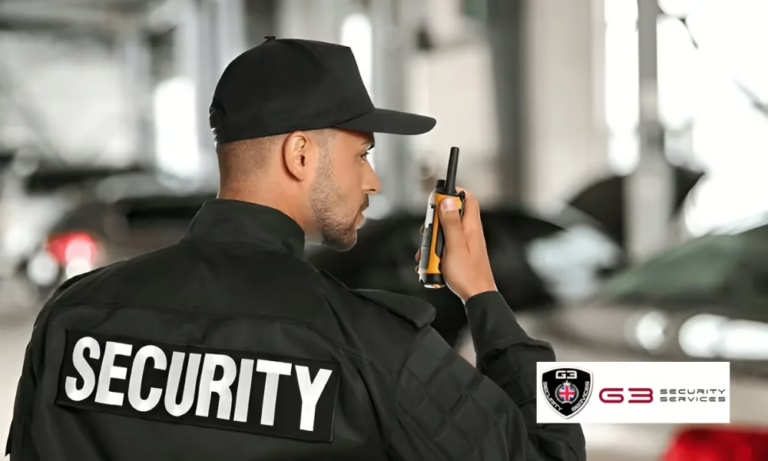
How to Use Hand Detector?
As security scanning processes become increasingly precise, the expertise required to operate a hand detector is more visible than ever. Correct usage of these devices is not merely a technical detail; it is a fundamental practice that directly impacts the foundation of operational efficiency and safety standards.
Basic Structure of Hand Detector
Handheld detectors are portable scanning devices that detect metal objects by detecting electromagnetic field changes. Door type systems play a supporting role in entrances with heavy human traffic and complete security processes with the ability to perform point control.
The detection mechanism is based on sensor structures that capture the frequency change occurring in ferromagnetic and non-ferrous metals. This structure provides a detection range ranging from small parts to metals with larger surfaces. The result of this technical basis is that it has become a complementary element of security protocols at many points such as airports, courthouses, concert areas and critical facilities.
Technical Background of Hand Detector Working Principle
Electromagnetic field generation is one of the important components of modern security technologies. Hand detector its coils produce a low-frequency field, usually in the range of 20-100 kHz, when the device operates, and when this field encounters metal surfaces, a change in waveform occurs. The device detects this change and notifies the operator via sound, light or vibration.
Sensitivity levels are decisive in this process. The adjustable sensitivity levels in professional models offer flexibility to the operator in environments where safety requirements change. Preferring a vibrating signal in noisy environments or highlighting visual notification in low light indicates that the device technology moves in harmony with the user.
Preparation for Hand Detector Use
The accuracy of the scanning process depends on the proper preparation of the device before use. Skipping preparatory steps makes it open to wrong conclusions. Controlling the battery level, adapting the operating mode of the device to the task area, and making sure that the sensor structure is not affected by a physical obstacle form the basis of this stage.
Professional security personnel take the first step towards detection accuracy by keeping the device parallel to the surface before starting scanning. This position is an important factor in reducing the risk of false alarms. The ergonomics of the device enable the operator to maintain his performance in long-term operation.
Hand Detector Warning Modes
Modern handheld detectors have three basic warning modes, each designed for different operational scenarios.
Voice Alert Mode
It is practical for low and medium density areas. When metal is detected, a clear audio notification occurs. It makes it easier for the operator to receive sensory feedback indoors.
Vibrating Warning Mode
It is designed to prevent the operator from missing the warning in environments dominated by crowd noise. Vibrating mode provides a significant advantage when warnings need to be received in sensitive areas without the use of sound.
Illuminated Warning Mode
Offers visual notification on dark-toned or low-light inputs. Its ability to work simultaneously with sound and vibration modes creates versatility in professional scanning processes.
The operator’s use of these modes in the right combination accelerates the flow of scanning, especially in areas where large audiences enter.
Systematic Application of the Screening Procedure
The scanning phase constitutes the most critical part of hand detector use. Professional screening protocols are carried out in a systematic order in which no points are missed on the body. These methods have been a key component of security standards for years.
Standard Scanning Stages
Screening is generally carried out in a one-way flow from the head area to the ankles:
The operator keeps the device at a distance of 2-5 cm during scanning, allowing clearer detection of signals generated according to metal density. Constant speed, systematic approach and surface-parallel grip significantly reduce the risk of erroneous measurements.
Sensitivity Mechanism in Handheld Metal Detectors
Sensitivity is one of the main technical elements that determine the performance of hand detectors. Single-frequency or narrow band frequency ranges enable the detection of particularly small pieces of metal. This level of sensitivity in professional security areas is an important part of operational standards.
It is possible that device performance may be affected in areas with high electromagnetic noise levels; For this reason, it may be preferable not to work too close to metal surfaces in the scanning area. Pre-task checks are therefore among the safety protocols as a decrease in battery level may cause a decrease in sensitivity. When sensitivity is gradually adjusted, a scanning intensity appropriate to the risk level of the environment is achieved.
Operator Approaches in Professional Security
The quality of operation is strengthened not only by the technical competence of the device, but also by the operator’s behavior in the field. The professional equivalent of using a hand detector is complemented by accurate interpretation of scan results and analysis of risk with behavior in the field.
The operator’s calm, controlled scanning and maintaining a certain distance both increases the scanning accuracy and creates a feeling of trust in the controlled person. The duration and intensity of the metal signal and the type of warning given by the device are signs of additional evaluation for the operator. Therefore, evaluating the results not based on a single signal but by analyzing the signal pattern constitutes one of the basic elements of security procedures.
Hand Detector Types and Specifications
Handheld detectors vary to adapt to different operational scenarios. For professional users, these differences form the technical basis of the process of choosing the right device. The table below comparatively presents the types of models that stand out according to their areas of use:
| Model Type | Sensitivity to Detection | Warning Mode | Area of Use |
| Standard Security Type | Intermediate | Sound / Light | School, plaza, shopping mall entrances |
| High Sensitivity Type | High | Sound / Vibration / Light | Airport, official institutions |
| Industrial Type | Medium–High | Sound / Light | Factory and production lines |
| Waterproof Type | Intermediate | Vibration / Light | Outdoor security points |
Thanks to this diversity, the right model can be chosen according to the requirements of the environment in which the device will be used. Sensitivity level, warning mode options and physical durability of the device are prominent parameters in the selection process of professional security teams.
Common Errors in the Scanning Process
Scanning accuracy is affected by the operator’s approach in addition to the technical capacity of the device. In practice, the most common errors are usually caused by changes in scanning distance, scanning angle and speed. Reducing these errors makes detection performance more predictable. The following items summarize the basic errors common in practice:
Most of these errors can be easily reduced by the operator mastering the scanning procedure. Executing scanning standards within a certain systematic framework reduces the risk of false alarms and prevents loss of time.
Evaluation of Technical Selection Criteria
The selection of handheld detectors is made through technical parameters directly related to the intended use. Professional security teams evaluate the device not only for its detection performance but also for its compliance with the physical conditions of the operating environment. The most taken into consideration technical elements in this process stand out as follows:
A holistic evaluation of these criteria determines the suitability of the device for both the safety level and the operator’s working comfort. Devices that increase the operational efficiency of security teams must deliver sustained performance, especially at busy entry points.
Hand detector solutions are among the models preferred by professional users with their body structure suitable for long-term use, stable sensitivity mechanism and multiple warning options. In addition to corporate entries, it also offers a functional structure in factory inspections and official security points. The technical stability of the devices helps the operator reduce scanning errors.
Analysis of Hand Detector Usage Scenarios
Handheld metal detectors offer an ideal solution for scanning large numbers of people in a short time at busy entrances. It is important for the operator to keep the scanning speed balanced so that the scanning queues do not become longer. Setting the sensitivity level too high may cause the operator to waste time with unnecessary alarms. However, low sensitivity may cause critical metal objects to be overlooked.
Therefore, determining sensitivity according to the risk level of the screening area is one of the basic practices of the sector. While vibrating warning mode is preferred in areas that require quiet operation, voice notification offers more practical use in crowded entrances such as gyms.
Frequently Asked Questions
Do hand detectors distinguish different types of metal?
Most standard models do not distinguish metal types; It only detects the presence of metal. However, there are also professional models on the market that can distinguish ferrous/non-ferrous metal.
Does screening affect detection accuracy of thick clothing products?
Thick fabric may partially affect detection distance, but in professional devices this effect is minimal.
Can water-resistant hand detectors be used in rainy weather?
Yes, models with protection classes such as IP65 or IP67 offer stability in outdoor use.
What is the role of the hand detector in points where there are door type detectors?
It is used as a complementary device to examine the area detected by the door type system in more detail.
Do hand detectors need maintenance?
Keeping the sensor surface clean and checking battery status are basic maintenance steps.