Converged Security

What is a Converged Security Professional and Why Is It the Next Big Career?

In the modern enterprise, risk is no longer neatly divided between the physical and digital realms. A sophisticated attack today often begins with a cyber vulnerability and ends with a physical action, or vice-versa. This blurring of lines has created a massive demand for a new type of expert: the converged security professional. This role is rapidly becoming the next big career opportunity, focusing on integrating the often-siloed disciplines of physical security and cybersecurity into one cohesive risk management strategy. A true converged security approach recognizes that securing the server room is just as vital as securing the server itself.


Why the Traditional Separation Failed

Historically, Chief Information Security Officers (CISOs) managed firewalls and data, while physical security directors managed alarms, guards, and access control. This separation created blind spots:

  • Siloed Communication: Incidents that began as a physical breach (like an intruder plugging a device into a network port) were often missed by the IT team, and vice versa.
  • Inconsistent Standards: Different standards for authentication, monitoring, and response procedures across the two teams.
  • Exploitable Gaps: Attackers deliberately target the seams where the physical and digital worlds meet, knowing that these areas are often poorly managed without a converged security mandate.

The modern threat landscape demands a converged security professional who can speak both languages.


The Role of the Converged Security Professional

A converged security professional acts as the bridge between the digital and physical teams, applying a holistic risk model to the entire organization. Their key responsibilities include:

  • Unified Risk Assessment: Conducting comprehensive evaluations that analyze how a vulnerability in the physical access system (e.g., weak visitor control) could lead to a digital breach (e.g., insider threats or malware injection).
  • Protocol Integration: Designing integrated response plans where a cybersecurity alert (e.g., suspicious network activity) triggers a physical response (e.g., a security guard checks the server room).
  • Technology Deployment: Managing integrated platforms like PSIM (Physical Security Information Management) that provide a single pane of glass view of both IT and physical security alerts.
  • Training and Culture: Championing situational awareness training that educates all employees on recognizing both digital scams (phishing) and physical risks (like tailgating & social engineering).

Why Converged Security is the Future

The demand for converged security expertise is soaring because organizations realize that security is an interconnected function, not a collection of departments. Professionals with cross-disciplinary skills—perhaps an IT background with certification in physical security management (e.g., CPP), or vice-versa—are highly valued.

This role offers:

  • High Earning Potential: Bridging two high-demand fields commands a premium salary.
  • Strategic Influence: Converged security professionals sit at the executive table, informing business decisions based on enterprise-wide risk.
  • Future-Proofing: As IoT (Internet of Things) devices blur the line further, this skill set will only become more critical.

For those looking to move beyond the firewall and specialize in high-impact risk management, the converged security professional is undoubtedly the career of the future.

Forget siloed security. The future is converged. Learn what a Converged Security Professional does, why this role commands a 6-figure salary, and the exact steps to become one.

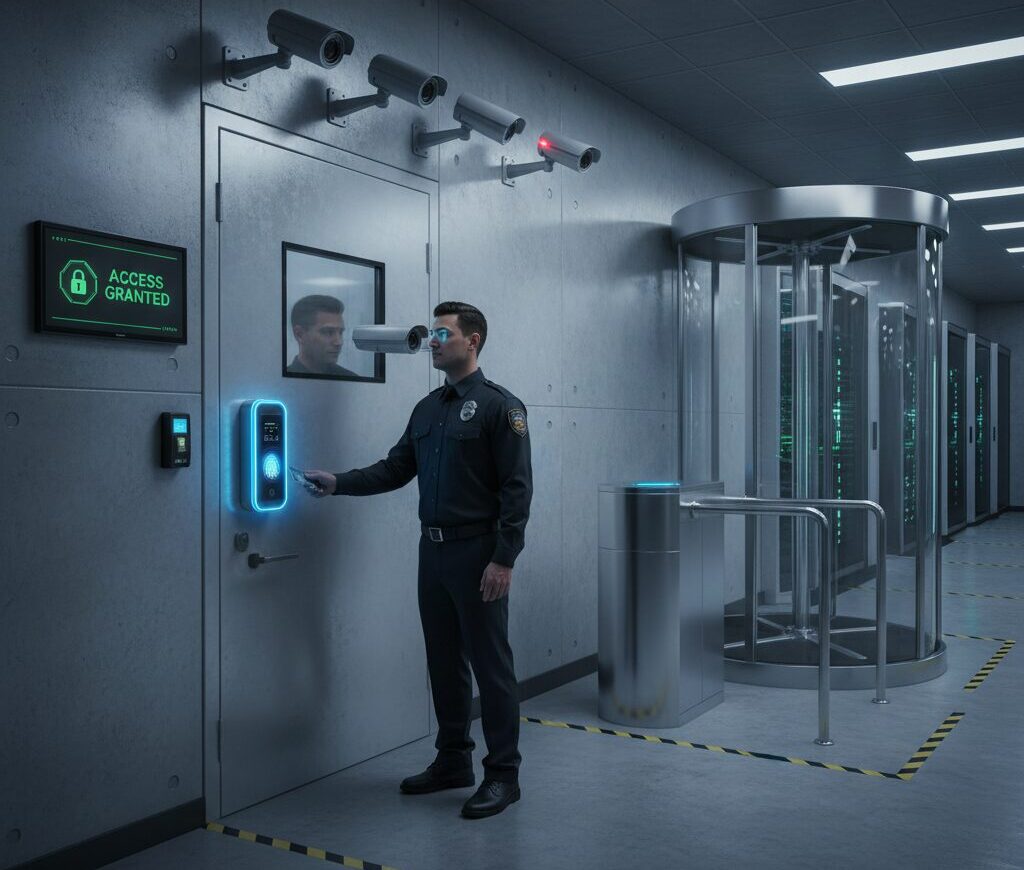
Imagine this scenario: A threat actor wants to breach a data center. The firewall is strong, and the network is encrypted. So, what do they do? They spoof a delivery driver’s ID, tailgate an employee through a secure entrance, and physically plug a malicious device into a server rack.

Who’s responsible for this failure? The IT team that manages the firewall? Or the Physical Security team that manages the door access?

In the past, these teams operated in separate worlds. This dangerous gap—or silo—is exactly where attackers thrive.

Enter the Converged Security Professional. This is not just another IT buzzword; it’s a critical, high-demand, and highly-paid career path built to bridge this exact gap.


What is “Converged Security”?

For decades, organizations have treated security in two separate buckets:

  • Physical Security: The world of “Guards, Gates, and Guns.” This includes access control (key cards), video surveillance (CCTV), alarm systems, and security personnel.
  • Cybersecurity (or InfoSec): The world of “Firewalls, Files, and Phishing.” This covers network security, data protection, identity management, and preventing digital breaches.

Converged Security is the end of that separation.

It’s a holistic management model that recognizes a physical threat can lead to a cyber-attack, and a cyber-attack can disable physical security. It combines physical security, cybersecurity, and even operational technology (OT) and personnel security (like insider threats) into a single, unified strategy.

The goal? To see the entire risk picture, not just one piece of it.

Meet the Converged Security Professional

A Converged Security Professional is the senior leader or specialist who architects and manages this unified strategy. They are hybrid experts who understand both the digital and physical worlds. They don’t just ask, “Is our network secure?” They ask, “How could someone physically bypass our network security?”

A Converged Security Professional is responsible for:

  • Holistic Risk Assessment: Identifying vulnerabilities across all domains (e.t., a weak lock on a server room is a cyber vulnerability).
  • Unified Strategy: Developing policies where IT and physical security teams work from the same playbook.
  • Technology Integration: Managing a Converged Security Operations Center (SOC), a “single pane of glass” where data from security cameras and network logs are monitored together.
  • Incident Response: Leading the response to complex threats that involve both physical and digital elements.

Why This Role is Exploding

The demand for this role is being driven by one massive trend: The Internet of Things (IoT). Your smart thermostat, the office security cameras, the factory-floor sensors, and even the building’s HVAC system are all now connected to the network.

  • A hacker can breach a smart thermostat to gain access to the wider corporate Wi-Fi.
  • A ransomware attack can physically lock all the smart-doors in a hospital.

When your security camera is also an IP-based network device, who is responsible for securing it? The old models fail. This is why companies are desperately seeking professionals who can manage these complex, hybrid risks.

A Six-Figure Salary for a Hybrid Skillset

Let’s talk about the (revenue) side for you.

Because “Converged Security Professional” is a senior, specialized role that blends C-suite strategy (like a CISO) with deep technical and physical knowledge, it commands a top-tier salary.

While the title is still emerging, it pulls from the highest brackets of both security fields. According to data from 2024-2025, senior cybersecurity roles like Security Architects often earn between $130,000 and $180,000, and top-tier Chief Information Security Officers (CISOs) frequently command salaries well over $200,000.

A Converged Security Professional, who must master multiple domains, falls squarely into this $120,000+ senior bracket, with experienced leaders pushing much higher depending on the company’s risk profile.


How to Become a Converged Security Professional

This isn’t an entry-level job. You don’t just “become” a Converged Security Professional. You build your way up by deliberately breaking out of your silo. You typically start in one field (Cyber or Physical) and aggressively learn the other.

Step 1: Master Your Foundation (Choose Your Path)

  • Path 1: The Cyber-to-Physical Route:
  • Your Background: IT, Network Engineering, or Cybersecurity.
  • Key Certifications: Start with CISSP (Certified Information Systems Security Professional) or CISM (Certified Information Security Manager). These are the gold standards in security management.
  • Your “Convergence” Move: Get certified in physical security. The industry standard is from ASIS International: the PSP (Physical Security Professional) or the CPP (Certified Protection Professional).
  • Path 2: The Physical-to-Cyber Route:
  • Your Background: Physical Security Management, Loss Prevention, or Law Enforcement.
  • Key Certifications: You already have the CPP (Certified Protection Professional).
  • Your “Convergence” Move: You must learn the tech. Start with foundational certs like Security+ or Network+ and then move aggressively toward the CISSP or CISM. You must learn to speak the language of IT.

Step 2: Get the “Convergence” Certifications

As this field formalizes, new, specific certifications are emerging to prove you have the hybrid skills. Adding one of these to your resume is a massive signal to employers.

  • SICC (Security Industry Cybersecurity Certification): This is one of the newest and most direct certifications. It is designed specifically to validate the skills for securing physical security systems (like cameras and access control) on a cyber network.
  • ASIS International’s “Essentials of Convergence” Certificate: A certificate program from the world’s leading physical security organization, focused on bridging the gap.
  • Certificate in Physical Security and Cybersecurity Convergence: Offered by various professional education bodies, this focuses on the intersection of the two fields.

Are You Ready to Be the Future of Security?

The era of siloed security is over. The threats are converged, and the only effective defense is a converged one. For security professionals stuck in one domain, this is your wake-up call. The “Converged Security Professional” is more than a job title—it’s the future of the industry. It’s a career path that offers greater challenges, greater impact, and a salary that reflects its critical importance.



Similar Posts

  • The 2026 CISO’s Dilemma – Why Your Cybersecurity Budget is Wasted Without Physical Security

    In the rapidly evolving threat landscape of 2026, the Cybersecurity Budget is no longer a necessary expense; it is a strategic investment directly enabling business resilience, competitive advantage, and customer trust. Chief Information Security Officers (CISOs) must navigate increasing threats—from sophisticated AI-driven attacks to persistent supply chain vulnerabilities—while facing pressure to demonstrate tangible Return on Investment (ROI) from the Cybersecurity Budget.

  • Secure Patrol Strategies

    A comprehensive secure patrol strategy is the foundation of effective physical security. It involves the systematic movement of security personnel or technology across a designated area to deter threats, detect anomalies, and respond swiftly to incidents. In today’s complex security landscape, understanding the various methods of implementing a secure patrol is crucial for businesses, institutions, and residential properties looking to maximize protection.

  • Ransomware profits drop as victims stop paying hackers

    The data is clear: Ransomware profits drop significantly as organizations prioritize resilience over capitulation. For years, the ransomware ecosystem thrived on a simple premise: rapid decryption of systems was worth the cost of the ransom. However, a major shift in corporate policy and technological maturity is finally disrupting this criminal business model. The dramatic decline in the percentage of victims choosing to pay means that the financial incentive driving these attacks is eroding, causing Ransomware profits drop to their lowest levels in years. This trend signifies a critical turning point in the global fight against cyber extortion.

  • Situational awareness training

    Situational Awareness Training Situational awareness training helps individuals and groups to better understand their environments and effectively utilize this information…

  • Drone Defense 101 – How to Legally Protect Your Facility from Aerial Spying

    The proliferation of affordable and sophisticated drones has introduced a challenging new vector for corporate espionage, unauthorized surveillance, and physical security threats. For facilities housing sensitive data, critical infrastructure, or high-value assets, passive security measures are no longer sufficient. Establishing robust drone defense protocols is paramount, but must be done within strict legal boundaries. This guide explores the essential components of a legal and effective drone defense strategy designed to safeguard your facility from aerial intrusion and spying.